


There are artists you like, artists you follow, and artists who somehow become attached to entire eras of your life without you realizing it is happening.
Kehlani is in that third category for me.
R&B will probably always sit at the center of my musical taste. I love great lyrics. I appreciate musicianship. But neither can substitute for the thing I care about most: a voice that sounds like it has actually been through something.
Give me the crack in the vocal. Give me desire that sounds a little embarrassing. Give me anger, longing, bad decisions, lust, regret, forgiveness, and the occasional completely unreasonable emotional response. The more human it sounds, the better.
Deep down, I have always thought of R&B as gospel’s playful, slightly rebellious cousin. Gospel asks you to surrender your problems to God. R&B occasionally asks whether you would like to text your ex at 1:14 in the morning and create several new problems.
I love God.
I also love rhythm and blues.
So when I first heard Kehlani’s “The Way,” featuring Chance the Rapper, in 2015, I immediately understood what she was doing.
This was my kind of R&B.
It deserved my full attention. It deserved quality speakers.
I was also encountering Kehlani from a slightly unusual vantage point. I wasn’t 20. I wasn’t single. I wasn’t desperately trying to determine whether somebody liked me back.
From 2015 through 2017, my own life was comparatively settled. I was happy in my relationship, a couple of years into a job I loved, and even the historically frosty relationship with my parents had begun to thaw after one of my mother’s health scares.
I was trying to figure out the next and better version of my life, but I wasn’t living inside the romantic chaos Kehlani was singing about.
That made her music fascinating to me in a different way.
She became a window into how twenty-somethings were articulating the enormous feelings of being twenty-something: love, betrayal, sex, insecurity, growth, regret, wanting somebody back while simultaneously knowing they should probably stay exactly where you left them.
There were songs where I remember thinking, God, I wish somebody had given me this language when I was 16.
Or 20.
Or 25.
By the time SweetSexySavage became part of my regular rotation, Kehlani was one of the younger artists I watched closely. That musical era was ridiculous: Lemonade, Anti, Views, 24K Magic, and Bryson Tiller helping give younger R&B its own emotional vocabulary.
And there was Kehlani.
What separated her for me was that the sadness never swallowed the rhythm.
She could sing about heartbreak and still make you move. The songs had humor, sexuality, dancing, levity. They understood that being heartbroken does not mean you stop wanting to go outside.
The visuals made me even more interested.
I noticed the tattoos, the dancing, the unmistakably West Coast sensibility, and people with different gender expressions, sexual orientations, and aesthetics appearing without the videos stopping to announce that diversity as some kind of corporate achievement.
They were just there.
Kehlani became one of my entry points into a younger queer culture that was becoming much more visible than it had been when I was the same age.
That mattered to me.
For most of my life, loving R&B has required a little private editing. I could love a song completely while quietly changing who the singer was singing to so it could fit my own life.
With Kehlani, that translation increasingly became unnecessary.
Sometimes a woman loved a woman. Sometimes identity itself still seemed under construction.
I didn’t need her to resolve any of that for me.
Part of appreciating a young artist is allowing them the dignity of becoming whoever they’re going to become without demanding that every stage of that process represent some final ideological position.
People should be allowed to discover themselves in public without the rest of us treating every discovery like a binding contract.
Then Peloton got involved
At the beginning of 2017, I bought a Peloton.
This was back when buying a Peloton still felt like purchasing futuristic exercise equipment instead of an extremely expensive clothes hanger.
I hated gyms.
But I discovered that I didn’t hate working out.
Some Saturdays, my happy place became disappearing into my home office and riding with Cody Rigsby or Ally Love while music I already loved changed the experience.
And Peloton, bless them, apparently agreed with me that Kehlani had made excellent workout music.
That changed my relationship with her catalog.
An artist does not have to keep releasing music to become more important to you. Sometimes your life finds new uses for songs you already know.
Kehlani became part of the soundtrack to me rediscovering movement in my 30s after spending most of my 20s not exercising consistently at all.
The music you work out to can become its own strange spiritual practice. Somewhere between discomfort and repetition, I found myself becoming unusually emotionally honest.
I think about where I have fallen short, the people I love, what I need to forgive, and the life I am actually living instead of the version I narrate to myself.
So now my favorite new technology company was repeatedly pairing my workouts with one of my favorite younger R&B artists.
Peloton and Atlantic Records had me surrounded.
As a consumer, I felt extremely well cared for.
So why hadn’t I seen her live?
That eventually became the obvious question.
She kept releasing albums. She kept collaborating. She kept wandering back into my listening life.
And still, I never bought a concert ticket.
Part of it was age.
When I discovered Kehlani in 2015, I was 31 and she was barely into her twenties. I imagined a concert packed with younger fans having the kind of night that probably ended with somebody crying in an Uber.
And these weren’t casual listeners.
Kehlani had fans.
There is a difference.
I loved the music, but I wasn’t sure I belonged in that room yet.
The other reason was simpler: live music means too much to me to treat it casually.
I don’t go to dozens of concerts every year. If I’m going to spend the money, rearrange my schedule, drive somewhere, park, buy something irresponsibly priced, and surrender several hours to an artist, I want the experience to matter.
And with Kehlani, I wanted to wait.
I wanted to see what happened to the songwriting.
I wanted to hear what happened to the voice.
I wanted to see how the stagecraft developed.
I wanted to know whether this incredibly compelling young artist would become an enduring R&B performer or simply remain attached to a particular era of my listening life.
By 2026, I was 42.
By then, I had been following her since “The Way” in 2015, and I finally had enough evidence.
On Saturday, August 29, I drove to Allianz Amphitheater at Riverfront in Richmond, Virginia, to see the Kehlani World Tour.
By the end of the night, I would realize that the only part of that decision I had gotten wrong was waiting so long.
Hands-free living and the economics of concert alcohol
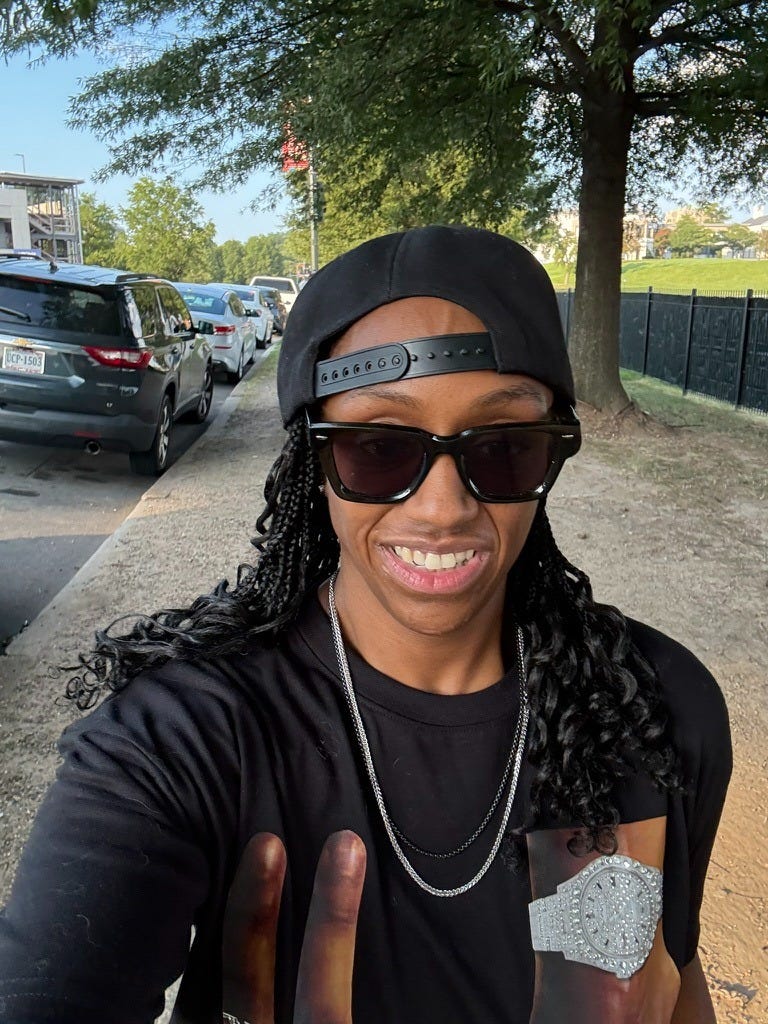
I got to Allianz around 6:30 p.m. and made an excellent tactical decision: no bag.
ID. Digital payment. Phones.
That’s it.
There was a faster security lane for people without bags, and I sailed through feeling extremely pleased with myself.
I had my personal phone and work phone in my back pockets, living what I can only describe as two-phone Baby Keem life. There was no reason to bring the work phone except that I had convinced myself my personal phone might die during something historically significant.
My personal phone’s battery was completely fine all night.
But I was prepared.
Before going inside, I was pleasantly surprised by people spread across the grass with blankets and chairs, literally touching grass while listening from outside the ticketed area.
Fans made an evening of being near the music even outside the ticketed area.
It looked less like overflow than people making an evening out of being near the music.
That felt very Richmond to me.
I went to college there, so the city already carried history for me. I could have chosen Atlanta or another similarly convenient stop, but Richmond felt right for this lineup.
From there, I bought water and the alcohol I believed would be necessary to publicly dance and sing to Kehlani songs, things I generally do alone.
I wanted the advertised cherry-lemon-bourbon situation. They were out, so I got cherry lemonade with bourbon. It was delicious, and I doubt I would have known the difference anyway.
I also got a Liquid Death because apparently water now needs branding with the energy of a heavy metal band.
The bartender told me bringing the plastic cocktail container back for my next drink would earn a seven-dollar discount.
Seven dollars.
Which tells you everything you need to know about how much the first drink cost.
Seven dollars is almost ten. Ten is basically twenty. Twenty is spiritually fifty.
I would obviously be keeping this cup.
I then began the pilgrimage to my supposedly very good seat.
Every attendant assured me I had excellent seats, which apparently meant I had paid enough to earn the privilege of walking approximately 750 additional miles to reach them.
A lovely security guard then told me I could not bring my drink container into the seating area.
I stared at her.
Did she not understand the seven-dollar discount situation?
Did she not understand that seven dollars was nearly ten dollars, which was basically twenty, which was basically fifty?
She did not care.
The drinks had to be transferred into plastic cups.
Around me, other people appeared to consider explaining the refill economics to security.
I was there for an extremely gay R&B lineup and one of my favorite artists of the last decade.
I poured both drinks into approved vessels and kept moving.
Then I discovered that my expensive seat gave me approximately 16 inches of horizontal human allocation.
Allianz Amphitheater, we need to talk.
There has never been tighter seating in the history of sitting.
To be fair, the attendants were right. Section 103, Row C was very close to the stage.
They simply neglected to mention that excellent seating apparently requires completing the Richmond leg of the Appalachian Trail.
DIXSON made me almost become a meet-and-greet person
When the DJ announced DIXSON, I was shocked.
DIXSON is one of those names that entered my consciousness through Beyoncé.
Before Renaissance, DIXSON’s name wasn’t familiar to me. Within days of the album coming out, it was, because I had gone through the credits and investigated everybody whose work I could find.
His name was among the writers on “VIRGO’S GROOVE” from Renaissance.
My operating theory was simple. Anybody Beyoncé trusted enough to help construct that album was probably worth knowing.
DIXSON kept resurfacing: “CHERRY SORBET” with Sevyn Streeter, then Kehlani’s “Slow Dance.”
So I knew the name.
What I did not actually know was DIXSON’s voice.
The crowd liked him almost immediately. When people didn’t know the songs, they were still moving. And enough people knew entire songs word for word that it was clear he had fans in the building.
Then he introduced “CHERRY SORBET” with the energy of, maybe some of y’all know this one. As a pretty avid Sevyn Streeter listener, I was elated to scream, I KNOW THIS ONE.
But “BARELY” was when I really converted.
He was gliding over the beat. His falsetto could pull from Prince and Bilal without feeling like an impression. The lyrical energy reminded me of Tank if Tank overthought everything.
And at one point, he gave me an Eddie King Jr.-level vocal run that made me draw upon a lifetime of Black church and R&B consumption, despite personally contributing absolutely no singing to either institution.
DIXSON’s set was fantastic.
At the end, he said this was his first tour and that he wanted to meet people afterward.
For about thirty seconds, I considered leaving my seat to get a picture.
I played it cool.
I kept it cute.
But DIXSON had a new superfan.
Apparently I already loved TheARTI$t
Then we entered the gay portion of the evening.
And, if I’m being honest, that is a significant part of why I came.
I love R&B, soul, love songs, breakup songs, personal-growth songs, all of it.
But for most of my life I had to flip their meaning so they could apply to relationships with women instead of men.
TheARTI$t required no such adjustment.
I knew she was on the tour, a couple of songs had made my playlists, and I liked her aesthetic. But I had intentionally not done a deep dive.
I wanted to see what the music and energy was like in person.
The answer: extremely comfortable.
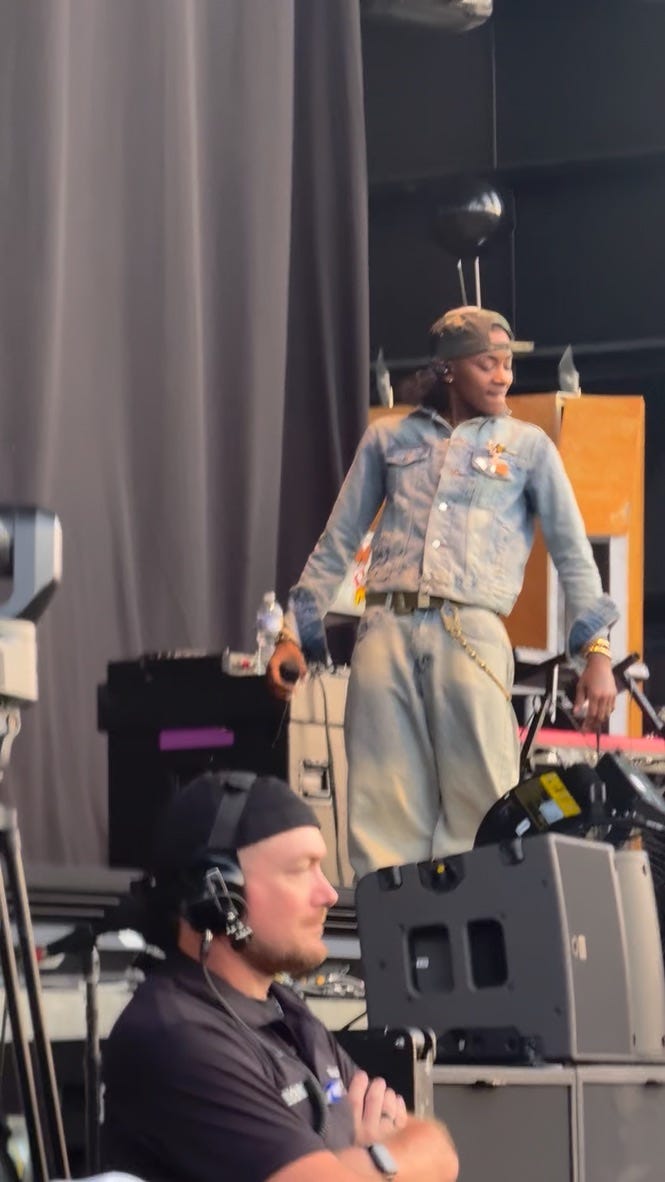
DIXSON had the raw magnetism of somebody learning how to work a tour crowd. TheARTI$t already knew exactly what to do with one.
She came to the edge of the stage. She locked eyes with women in the front rows while singing love songs. She moved like somebody who understood that sustained eye contact is occasionally a weapon.
That woman could give a wench butterflies.
She also wore denim on denim in a way that reminded me there are certain fashion achievements I simply need to admire from a distance.
And that woman can sing her ass off.
Then Durand took us to queer church
By the time TheARTI$t left the stage, the sun was going down.
And the energy changed.
I have followed Durand Bernarr for years, largely because of The Terrell Show.
Discovering Terrell Grice’s YouTube show changed my media diet for the better. I became a premium subscriber and, to my knowledge, I haven’t missed an episode since.
Terrell has hosted singers ranging from Avery Wilson and Lalah Hathaway to the Clark Sisters and Summer Walker.
But one of the people who kept showing up in that universe was Durand Bernarr.
Within 30 seconds of watching Durand, it was obvious he might be a generational talent.
By the end of an episode, it was equally obvious he might be one of the most singular human beings walking the Earth.
Durand’s performance is never simply vocals.
It is live musicianship.
Cabaret.
Ballroom.
Spoken word.
R&B.
Funk.
Comedy.
Church.
He can move among all of those things without any of them feeling like costume.
Durand, to me, is what freedom and Black boy joy can look like if you have enough access to it throughout your life.
When he finally appeared, he had on a bob wig and a black suit tailored as well as anything ever worn on Designing Women or Murphy Brown.
Then he started doing the Pink Panther dance.
I was thrilled.
During “SHARP,” he moved with the energy and magnetism I expected, except somehow bigger. At one point, he dropped into a ballroom-style dip, then got back up and kept singing because apparently gravity and physics are suggestions.
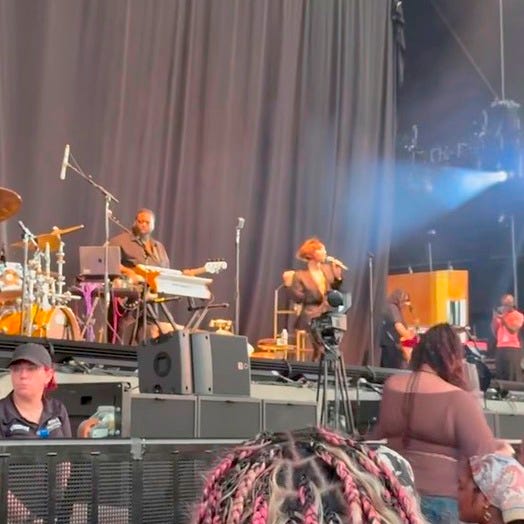
The worship tradition I grew up around understands that praise can be physical. You shout. You move. You dance. Your body responds before you’ve necessarily intellectualized why.
Ballroom has its own language of movement, precision, drama, release, response, and community.
Durand can somehow put those traditions in conversation with one another while singing his face off.
Even his line about your parents getting together in “heated fellowship” to create the masterpiece that is you is hilarious! It collides spiritualism, romanticism, sex, ancestry, and comedy into one ridiculous and genuinely beautiful idea.
Your parents desired each other.
That desire created you.
Praise God?
I don’t know.
Durand makes it make sense.
He also performed “Self Aware,” another song that had lived on my playlists without me fully understanding Durand was at its center.
Hearing him handle something faster and more lyrically dense only reinforced the absurdity of his range.
His vibrato, volume control, tone, and visible breath support all point to the same thing.
Clark Sisters. Erykah Badu. Sly and the Family Stone. Earth, Wind & Fire. Lady Gaga.
Eventually the comparisons become useless because Durand arrives somewhere entirely his own.
Everything he does has extraordinarily high alignment to my spirit.
Thank God for lesbians
After three opening acts, I assumed it was finally Kehlani time.
It was not.
The DJ came back out and told us he had just talked to Kehlani and she wanted Richmond to get more hyped.
Sir.
We had been doing our part.
Still, he started DJing, and the audience obliged.
After roughly two hours of music, I made a calculated decision.
Bathroom.
Second drink.
Merch.
Return before Kehlani.
I bought a Kehlani T-shirt and hat, got another drink, handled the bathroom situation, and heard the crowd getting louder without hearing Kehlani.
Perfect timing.
Then, as I was pouring my second expensive alcoholic beverage into its security-approved plastic cup, the lights started changing.
I walked back through my gate and discovered that the concept of assigned seating had collapsed.
People had rushed forward and into the aisles. My path back to my seat was completely blocked.
And this is the moment when I had to thank God for lesbians.
A masculine-presenting woman and her girlfriend were directly in front of me, moving through the crowd with purpose.
They pushed forward.
I followed.
The girlfriend realized I had attached myself to their operation, turned around, and essentially said, “Just act like you’re with us.”
Say less.
I grabbed the back of her jacket.
Her girlfriend bulldozed a path toward their seats, which happened to be close to mine, and the three of us moved through the crowd like a tiny tactical unit.
I got back to my seat right as the lights dropped.
After all that waiting, Kehlani was finally walking onto the stage.
Oh, thank God. She’s fully clothed.
For the opening acts, much of the stage had been concealed behind a massive curtain. When Kehlani’s show began, the space seemed to physically expand.
The entire back wall became a video environment, with multiple scenic levels, staircases, room-like visual spaces, and dancers positioned across different elevations.
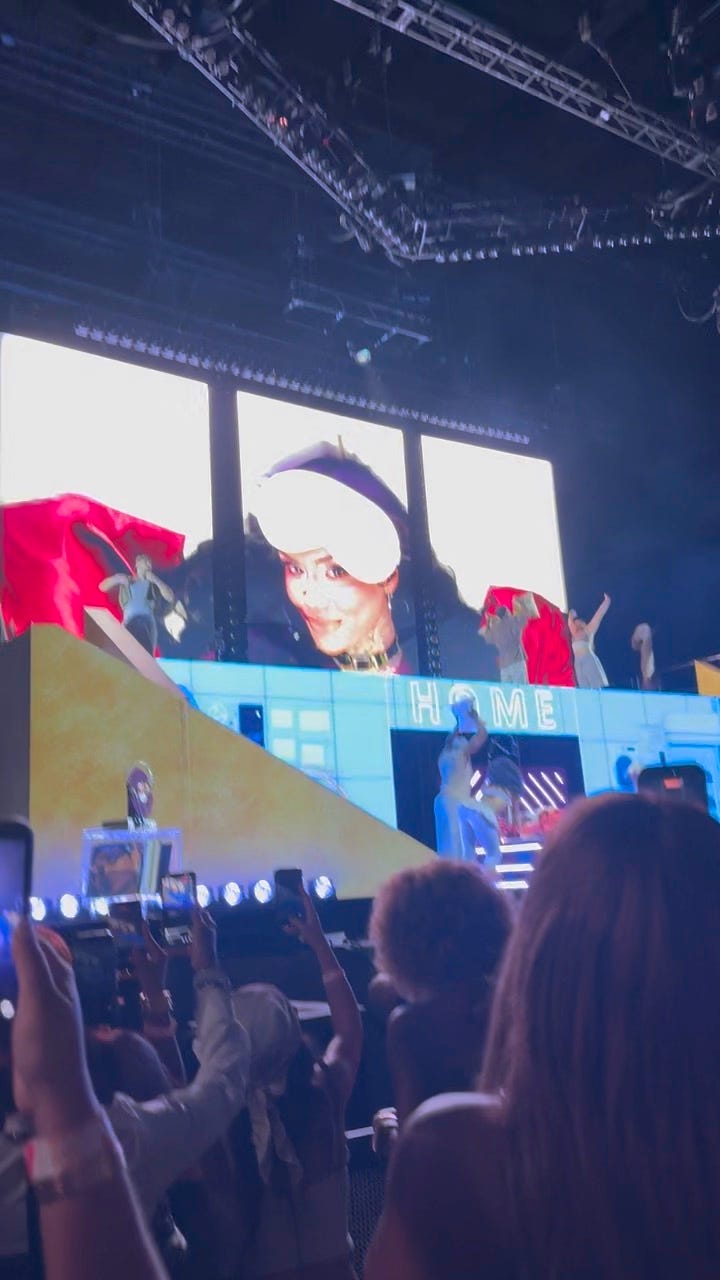
When Kehlani’s set began, the stage opened into an entire visual environment.
Then I saw the dancers.
Some of the most beautiful human beings on the planet were standing along those stairs. Excellent!
Then Kehlani appeared at the top and began descending as “Anotha Luva” started.
And my first genuine thought was:
Oh, thank God. She’s fully clothed.
I am slightly ashamed to admit this.
But I had seen enough Kehlani performance clips over the years to know that clothing coverage can vary, and emotionally I needed a few minutes to acclimate.
She had on khaki-colored pants and a maroon top.
Cute.
Manageable.
We could proceed.
Then she started dancing.
And the dominant feeling was joy.
Everyone around me was losing their minds too.
My partner and I have talked about this after other shows. People spend enormous amounts on tickets and then arrive determined to demonstrate that nothing happening could possibly impress them.
Too cool to dance.
Too cool to sing.
Too cool to act like the artist they paid hundreds of dollars to see is actually exciting.
Richmond had no such problem.
People geeked out.
They screamed.
They sang every word.
They danced.
I had gone into the night knowing I was going to behave like a fan.
The gift was discovering that everybody around me had decided to do the same thing.
It was really nice to be amongst people.
I went to college there. I was young there. I was gay there. I spent part of my twenties learning what versions of myself I felt comfortable showing other people there.
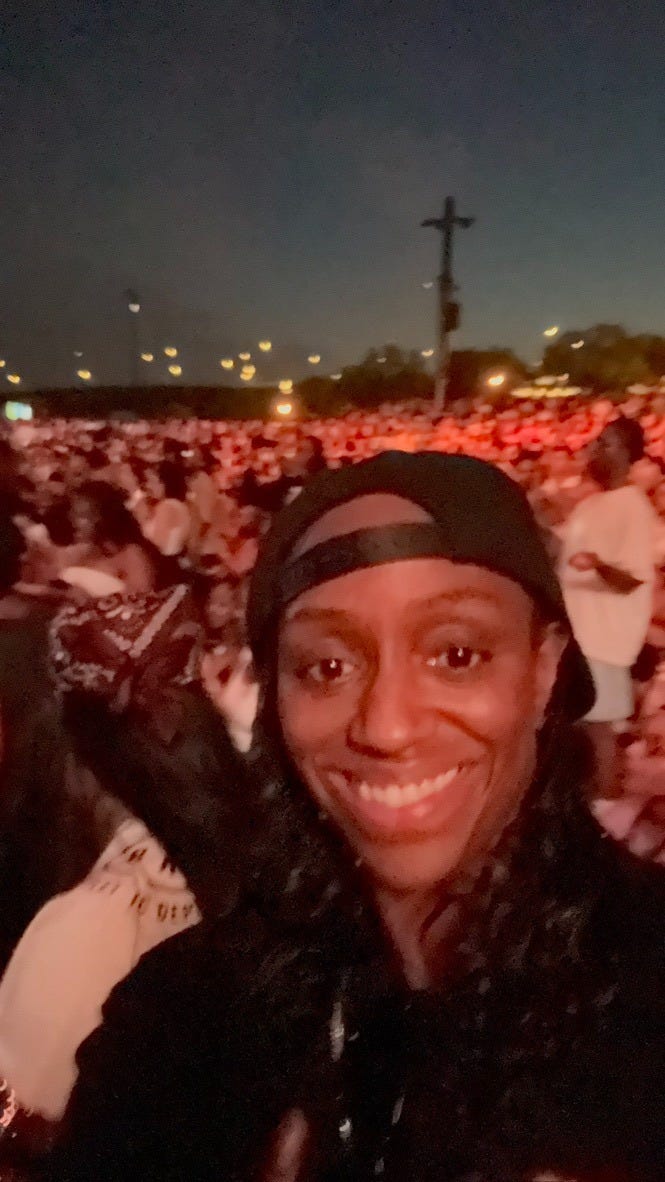
There was something wonderfully circular about returning for this show, surrounded by younger people, older people, locals, travelers, and an amphitheater so full that even the grounds outside had been teeming with people.
I had spent years privately translating R&B into my own life.
Now I was standing in a packed amphitheater singing it with everybody else.
Kehlani can dance dance
One of the things the concert confirmed immediately is something I have believed for years:
Kehlani can dance.
Dance dance.
And I’ll go further than I usually do with these rankings: I personally think Kehlani is the best dancer working in R&B right now, and maybe my favorite mover in popular music, period.
There are performers with more elaborate choreography and performers whose shows are built around dance spectacle. But nobody moves in a way I enjoy watching more.
She is loose without looking imprecise. Sensual without stopping the performance to announce sensuality. Technical without making the technique itself the point. Her shoulders, hips, hands, footwork, and even the way she changes levels seem to answer details inside the production.
She doesn’t just dance to the song.
She phrases with her body.
The only person who makes me hesitate before simply declaring Kehlani my favorite dancer in R&B is Victoria Monét. Which, considering their history, is deeply funny to me.
Apparently my personal R&B dance championship is also an ex-girlfriend situation.
But even there, I respond to them differently. Victoria’s movement often feels exquisitely composed: every extension, angle, isolation, and transition polished into place. Kehlani feels more elastic to me. More conversational. The choreography can look like it occurred to her body because the music demanded it.
That’s the movement style I love most.
Kehlani was doing TikTok dances before TikTok existed.
Around 2017, I was stuck in a United lounge during a delayed flight when two sisters beside me started using an app I did not yet know was Musical.ly.
I was trying very hard to mind my business.
Then they started playing the A Boogie remix of “CRZY.”
I had never heard the remix, so eventually I had to ask whether somebody was rapping over Kehlani.
They explained that it was an official version.
Then they debated whether to invent choreography or reproduce Kehlani’s moves from the video.
At this point I inserted myself.
My advice was simple: do what Kehlani does.
That video is amazing.
She can dance.
Nearly a decade later, Richmond proved that point at scale.
Kehlani and her dancers moved through what felt like a clinic in multiple forms of dance. The movement was integrated into the music instead of pasted on top of it.
That matters.
Kehlani performs music through movement.
And then there is the voice
I have probably watched twenty Kehlani live performances online over the years, and what is remarkable is how little anxiety I have when I press play.
Live vocals are where even artists I love can become unpredictable. Kehlani usually isn’t. Again and again, the performances are vocally precise, visually considered, and unmistakably hers. That consistency is part of why I walked into Richmond with such high expectations.
But hearing the voice in person revealed something the videos hadn’t quite captured.
Over time, she has developed a vocal identity that is unmistakably hers.
Great R&B singers eventually get to a place where you don’t need the song title or the face.
Brandy can sing several notes and you know it’s Brandy.
Muni Long has particular turns in her voice that immediately identify her.
Some singers have a run, a rasp, a yodel, a tone, or a way they attack a phrase that belongs to them.
During the first four or five songs in Richmond, I realized Kehlani has fully arrived at that place.
I still don’t know whether I have perfect technical language for what she does.
But I know it when I hear it.
There is a conversational quality to her phrasing, followed by moments where she opens the sound and reminds you she can really sing. Her choices about breath, tone, and phrasing feel distinctly hers.
It smacked me in the face live.
I had also wondered how the new songs would work without all of their famous guests.
But live, I didn’t spend those songs waiting for absent celebrities.
On “Anotha Luva,” “Shoulda Never,” and “No Such Thing,” Kehlani’s portions were enough. The arrangements were built around the performer who was actually standing in front of us.
That sounds obvious.
It isn’t.
Plenty of feature-heavy songs become awkward live because half the record belongs to someone who isn’t on tour.
This worked.
This is why I waited
Seeing camera operators document the show all night made me hope some version of the performance eventually gets preserved for people who weren’t there.
Kehlani’s albums are complete experiences. If you like her music, which I obviously do, the records work beautifully on their own.
But live Kehlani is a different artist.
She had the stamina to perform what felt like forty songs, even though I knew intellectually there was no way she had performed forty songs.
She danced.
She sang.
And because I was sitting close enough that she repeatedly came toward my side, there were several moments where I could plausibly convince myself we were making eye contact.
I will not be accepting outside analysis of whether that actually occurred.
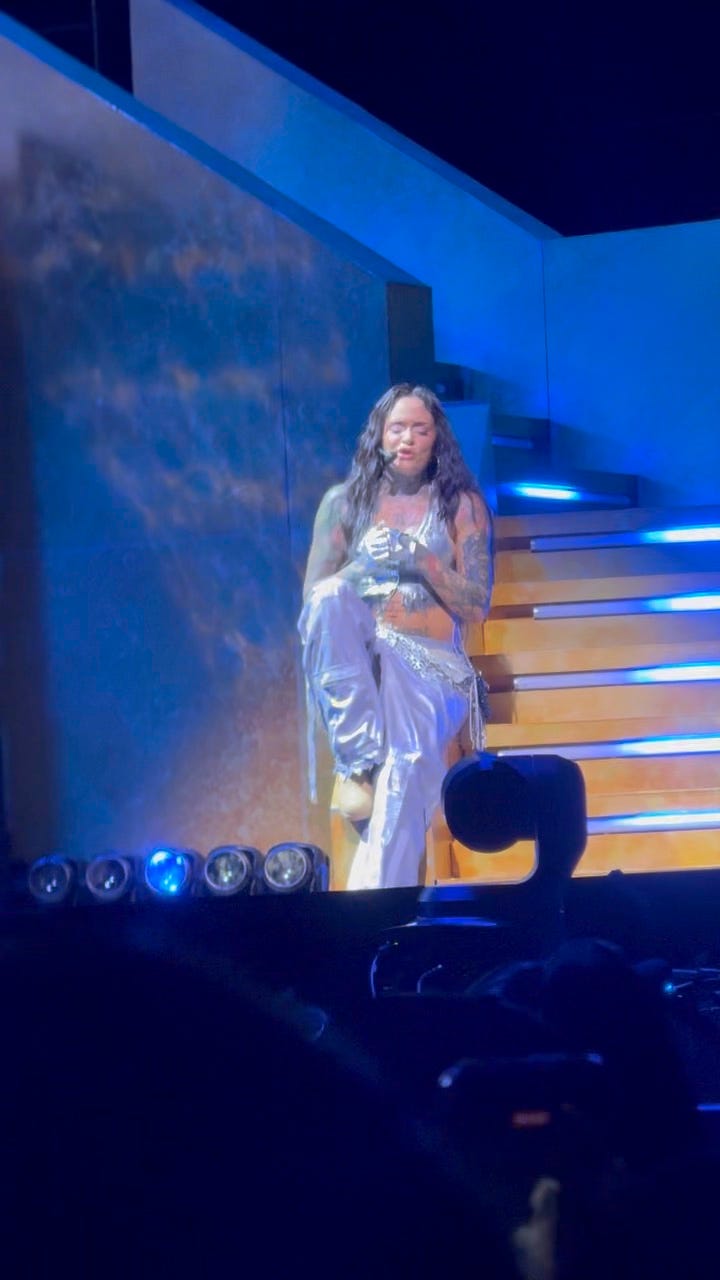
During costume or production changes, the DJ kept the catalog alive.
Those intermissions became communal Kehlani listening sessions.
Songs we weren’t necessarily going to hear live came over the speakers, and thousands of people sang them together anyway.
There is something qualitatively different about hearing one of your favorite songs at home versus hearing the opening notes surrounded by thousands of people who recognize it at exactly the same moment.
Again, maybe this whole night was teaching me something extremely simple.
Sometimes you want to love something around other people who love it as much as you do.
I wanted more old Kehlani. Of course I did.
If I have one critique of the show, it is the same critique I bring to basically every concert:
Give me more deep cuts.
Give me more old songs.
But that complaint is especially unfair on the Kehlani World Tour, whose point is the newest album and this era of her career.
And the more I thought about it, the more I understood the choice.
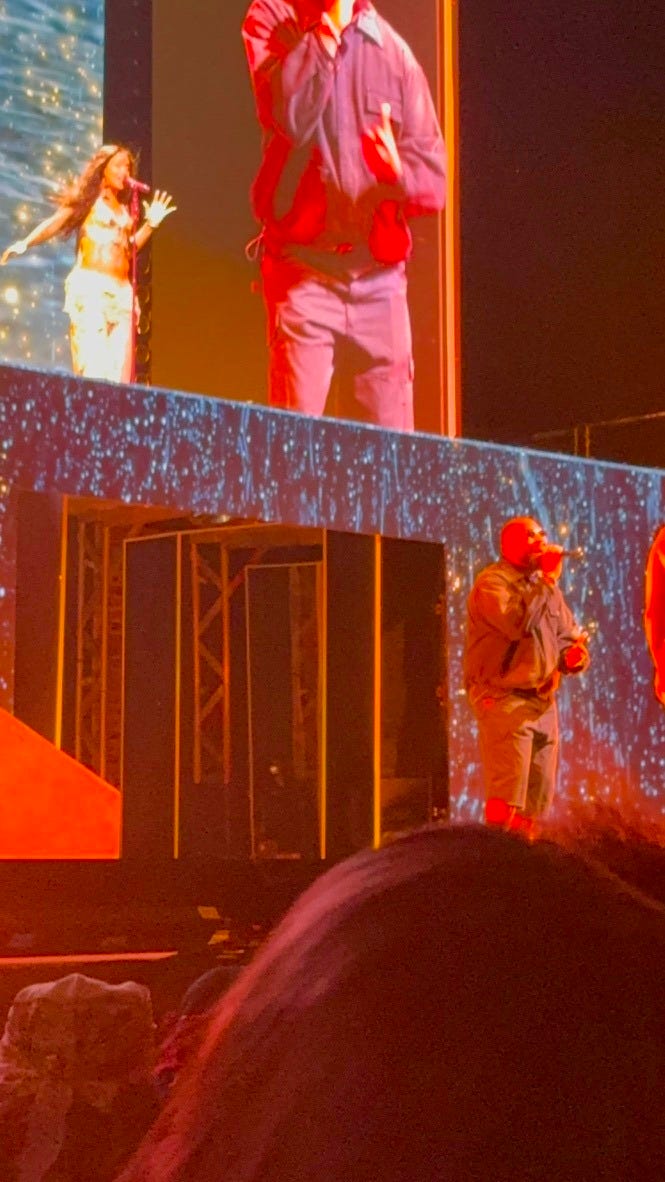
The latest album may be the best amalgamation yet of all the different things Kehlani has learned how to do.
We got “Toxic,” which remains one of my favorite songs from It Was Good Until It Wasn’t.
We got “Distraction,” which reaches all the way back to the era when I first became invested in her.
But newer songs like “Oooh” can now occupy some of the emotional and musical territory that older records once owned for me.
The new music doesn’t erase those eras.
It absorbs them.
And then there is “Folded.”
I am not a “Folded” girly.
This is not an insult.
I have a decade-plus of Kehlani music available to me. There are too many songs carrying too many memories for one new song to suddenly elbow everybody else out of the way.
But “Folded” changed Kehlani’s career.
In 2026, it won her first two Grammys, Best R&B Song and Best R&B Solo Performance.
For a new generation of listeners, “Folded” may be the beginning of their Kehlani story.
During the concert, Kehlani addressed the running joke that even longtime fans might be a little tired of hearing it.
Her point, as I remember it, was essentially: I know. But respect this song. This changed my life.
And she was right.
If you have been watching somebody work for more than a decade, you don’t get to resent the thing that finally opens another door for them just because you personally entered the building years earlier.
“Folded” brought new energy, new listeners, new institutional recognition, and a new chapter to a career I had already watched grow for years.
Fine.
We can hear “Folded” again.
The ending explained the whole night
The moment that may stay with me longest was “Unlearn.”
I love that song because it belongs to one of my favorite categories of Kehlani music: songs where the real subject isn’t simply the relationship.
The subject is the self inside the relationship.
Who am I right now?
What have I learned incorrectly?
What am I carrying into the way I love you?
How does my understanding of myself affect the way I allow you to love me?
Kehlani has written versions of that question throughout her career, and I think that is one reason I have aged alongside her music so comfortably.
The subject matter matured without pretending that maturity means figuring everything out.
Sometimes adulthood is simply developing better language for the things you still don’t understand.
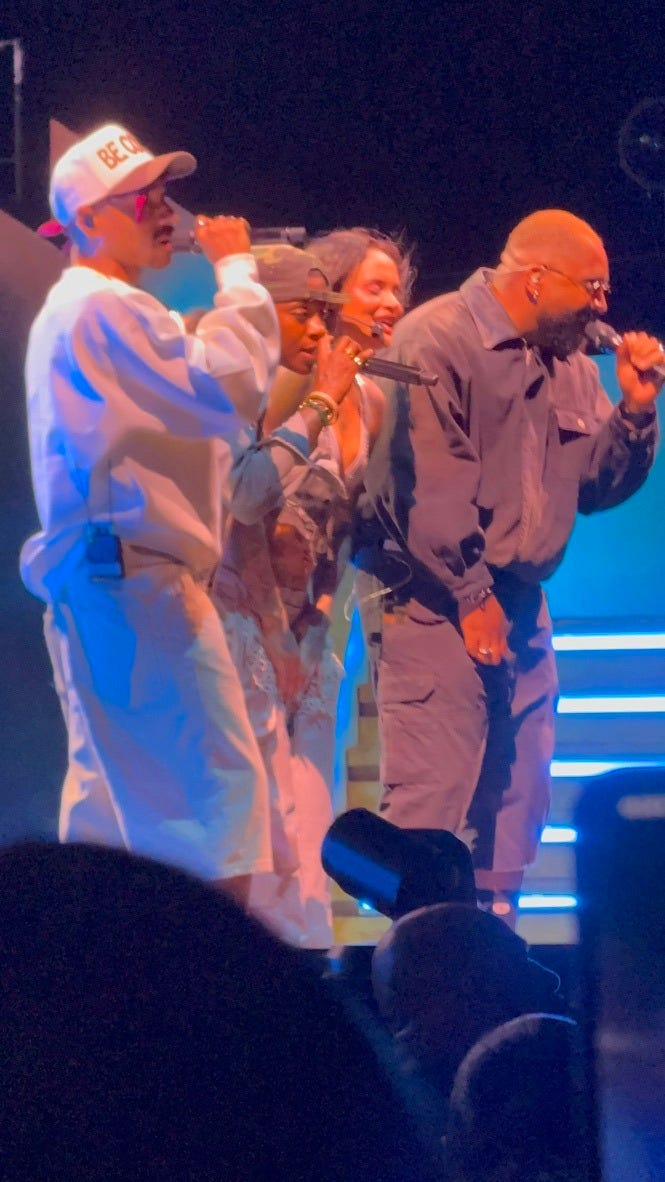
For “Unlearn,” she brought DIXSON, TheARTI$t, and Durand back onto the stage.
Four extraordinary R&B voices.
A cappella.
And they shared the song.
They moved toward and away from the center as each person took a part, reacting as one voice stepped forward and the others built underneath it.
Nobody seemed interested in proving they could out-sing everybody else.
Voice.
Harmony.
Emotion.
Restraint.
Individuality.
Community.
It was basically everything I had been trying to explain about why I love rhythm and blues standing together on one stage.
And Kehlani shared it.
That felt fitting.
Because the night had shown me her magnetism does not require consuming all the oxygen around her.
DIXSON could turn people into fans.
TheARTI$t could stare women into emotional insolvency.
Durand could take us to church.
And none of their talent diminished Kehlani.
It made the world she built for the tour feel bigger.
A few tags weren’t enough
The last thing Kehlani asked of us before the night ended was simple: when we posted about the show, don’t just tag her. Tag everybody. Talk about everybody who had been part of what we had just seen.
That stayed with me.
I could have gone home, posted a few photos, tagged Kehlani, DIXSON, TheARTI$t, and Durand, and moved on. That is more or less how social media trains us to process an experience now: capture the proof, tag the people, move on.
But after a show this considered, that didn’t feel like enough.
Maybe five thousand words is too much for a concert review. Maybe it is exactly enough for this one. The show had given me four artists worth paying attention to, dancers worth watching, voices worth listening to, a crowd worth remembering, and more than a decade of my own relationship with the music to make sense of.
A few tags couldn’t hold all of that.
This could.
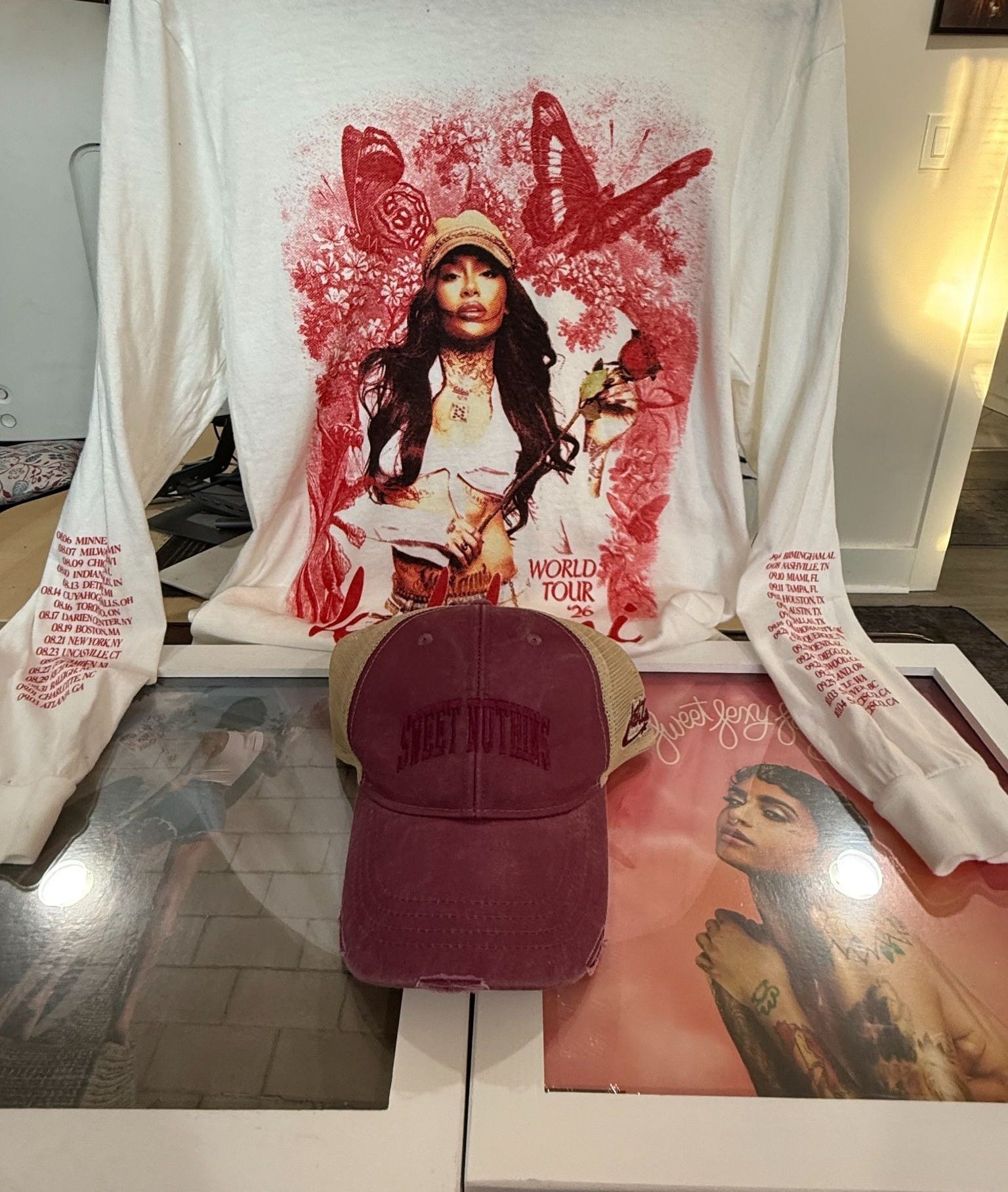
Worth the wait
The show ended sometime after 10 p.m., and I immediately began power walking toward my car because spiritual transcendence is wonderful, but so is avoiding Richmond traffic late on a Saturday night.
On the walk out, I started listening to everybody else process what had happened.
“I wish she had performed…”
“She is actually even more beautiful in person.”
“Did you hear that first dude, DIXSON?”
Different people had different versions of the same reaction.
Once I finally made it back to my car, I had what I can only describe as a God-given premonition to check my YouTube watch history.
And there she was.
One of my favorite On The Radar performances of the last several years was TheARTI$t performing “Sober.”
I had watched that version over and over during 2024 and 2025.
I had just spent an entire set believing I was discovering a new artist when I was technically already a fan.
Welcome to music discovery in the algorithmic era.
You can know the song without knowing the artist. YouTube, Apple Music, and Tidal can keep putting someone in front of you without ever completing the jump from “I like this” to “I follow this person.”
It took Kehlani putting TheARTI$t physically in front of me to close a loop that recommendation engines had been working on for years.
Kehlani was more magnetic in person than she had ever seemed through a screen.
The catalog landed differently.
The opening acts gave me new music, new context, and in one case informed me that I had apparently already been somebody’s fan for several years without learning a person’s name.
The Richmond crowd gave me something I hadn’t realized I needed.
Permission to care loudly.
And that may ultimately be the thing I misunderstood when I was younger.
I wondered whether I belonged at a Kehlani concert because I imagined younger fans experiencing her music differently than I did.
What I failed to account for is that music collapses that distance.
I did not need to be 22 to understand the song.
I did not need to have lived Kehlani’s life to recognize the feeling.
I didn’t need to translate every pronoun anymore.
And I definitely didn’t need to act cool.
I had waited because I wanted to see what happened to Kehlani’s voice, songwriting, dancing, identity, and stagecraft as she grew into herself.
The artist I discovered in 2015 had become a performer with enough catalog, technical skill, stamina, confidence, history, and self-awareness to make that entire journey feel coherent onstage.
Time had done exactly what I hoped it would do.
It gave her more to work with. And it gave me more ways to understand what I had been hearing all along. So yes.
It was worth the eleven-year wait. I just won’t be making that mistake again.