

I’ve been watching Formula 1 for a while. Long enough to have explained DRS to someone who didn’t ask. Long enough to remember when “American fan of F1” was a personality type, not a demographic. For most of that time, getting anyone I knew to care about the sport was impossible. The cars go fast (like, the fastest). The engines go vroom (like, really big vroom). Nobody cared.
Then Drive to Survive came out, and suddenly everyone I knew had opinions about Christian Horner. People were talking about how Guenther Steiner was funny and Daniel Ricciardo was quite possibly the only driver having a good time. By the time they finally watched a race, they already had a favorite team, swag to prove it, a hatred filled grudge, and a take on tire strategy.
The sport didn’t win them over. A Netflix documentary did.
I looked up what Liberty Media paid for F1 in 2017. Four and a half billion dollars. Netflix paid nothing for the sport, but it did make the show that turned F1 into a new American obsession. But remember: Liberty owns F1. Netflix owns a show about F1. When the Drive to Survive contract ends, Liberty keeps the fans. Netflix goes looking for the next docuseries.
It had never been clearer to me what broadcasters and streamers are actually doing with sports rights. They’re renting.
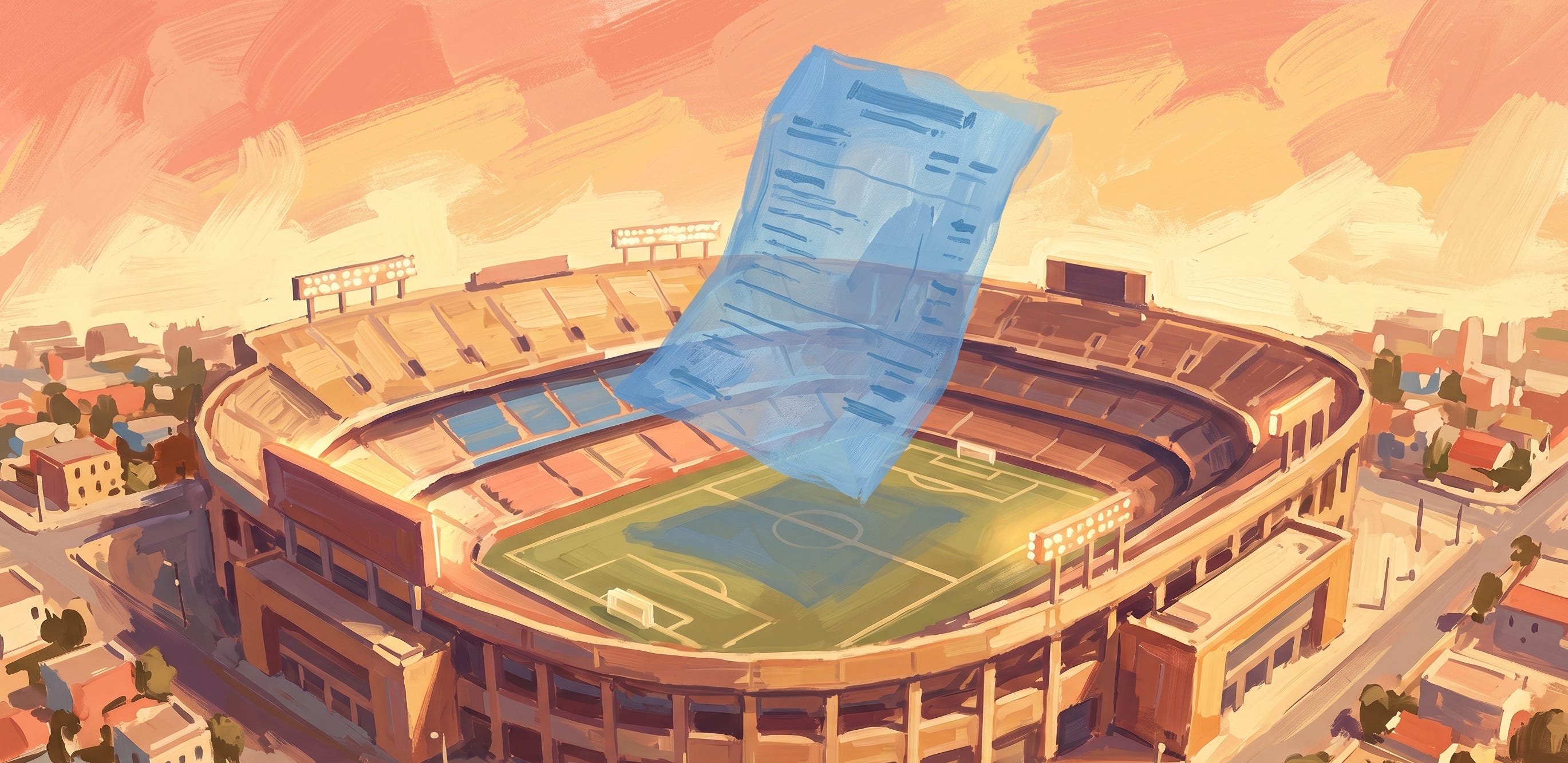
Rights are rent
Every media rights deal in pro sports is a lease. Broadcasters pay an annual fee for a small window of games and play. At the end of the term, you own nothing. The league keeps everything: the schedule, the data, the betting partnerships, the jersey rights, the merchandising, the expansion plans, the next negotiation. You own the right to show games during a specific window. That’s it.
The NBA just signed an 11-year, $76 billion deal with Disney, NBCUniversal, and Amazon. Disney alone is paying $2.6 billion a year, up from $1.4 billion on the previous contract. Amazon is paying $1.9 billion a year for 66 regular-season games. At the end of 2035, those three companies will have collectively handed the NBA seventy-six billion dollars. Come 2036, they’ll be back at the table. The NBA will have spent a decade building a more valuable product on the broadcasters’ dime, and it will charge them accordingly.
The tell is in the trend line
Thursday Night Football on Prime Video averaged 15.3 million viewers in 2025. Up 16% year over year. Up 60% from Amazon’s first season broadcasting it in 2022. The median viewer is nearly seven years younger than on linear. All of that growth accrues to the NFL.
When the TNF deal comes up for renewal, the league won’t reward Amazon’s development work with a price break. Rent is going up. Amazon built a younger, more affluent NFL audience. When they renegotiate, the NFL will charge Amazon more money to keep the audience they already built.
Netflix saw the math and tapped out. They paid $150 million a year for two NFL Christmas Day games. In their Q4 2024 shareholder letter, they told investors they’d focus on “big, memorable moments” rather than “acquiring rights to large regular-season sports packages.” That’s a company that looked at the NBA deal, looked at the NFL’s package pricing, and said out loud: this doesn’t work for us. They did the math on what they’d own at the end of it, and the answer was nothing. Netflix’s whole business is owning IP that can be rewatched, licensed, merchandised, and spun into the next show. A regular-season sports package doesn’t give you any of that. You rent the window, you pay the rent, you leave.
Ownership is equity
Liberty Media bought Formula 1 in 2017 for $4.4 billion. Then they funded Drive to Survive. The show dropped the average F1 viewer age from 44 to 32. U.S. fan growth hit double digits. Three American Grands Prix now exist. F1’s valuation has grown exponentially.
Netflix made the show. Liberty kept the sport. Every fan Drive to Survive delivered went to Liberty’s balance sheet, not Netflix’s.
Red Bull figured this out two decades ago. In 2005 they bought a struggling Austrian soccer club and renamed it Red Bull Salzburg. They bought a fifth-division German side and climbed it into the Bundesliga (RB Leipzig is now one of the top teams in German football). They own two Formula 1 teams, hockey teams, cycling teams, MLS and Brazilian and Japanese soccer clubs, and most of the stadiums those teams play in. Red Bull’s brand value exceeds $20 billion. The energy drink does $10 billion a year. What Wikipedia won’t tell you is that Red Bull’s actual product is content. Every race, match, and extreme-sports stunt is proprietary inventory Red Bull Media House produces, packages, and licenses to broadcasters who would otherwise be charging them. The drink funded the sports empire. The sports empire now funds the drink.
Streamers haven’t connected that cycle yet.
What a streamer actually gets when they own a league
Rent a rights package, you own a window. Own the league, you own the economy around it.
Schedule control: you decide when games happen, which means you decide when peak engagement hits your platform.
Data: every play, every biometric, every possession feeds your ad targeting, your recommendation engine, your retention models.
Betting rights: the fastest-growing adjacent revenue stream in sports.
Merchandise: high-margin, year-round, globally distributed through your own logistics footprint (a particularly interesting bet if your name is Amazon).
The archive: every game ever played becomes evergreen inventory.
International rights: the piece leagues guard hardest.
Expansion: new teams, new markets, new cities paying to get in.
And the most important thing: no more negotiations. No more 40% rate hikes. No more bidding wars. No more Warner Bros Discovery losing $1.1 billion in projected ad revenue because they couldn’t match Amazon’s check.
That’s equity. It puts streamers on the other side of the table.
For those worried, there is a wall
Now the bad news for broadcasters who just got excited reading this. The big four leagues have structured themselves specifically to prevent what I’m describing.
The NFL bans corporate ownership outright. No publicly traded C-corp can own an NFL team. The recent private equity rule change caps institutional investment at 10% per team, but you get no voting rights, passive only, six-year lockup. The NBA, NHL, MLB, and MLS cap institutional ownership at 20–30% total, with similar passive-only restrictions. Sovereign wealth funds need special approval. Nobody is voting on league strategy from outside the room.
You won’t be reading “Amazon buys the NBA” anytime soon. Even “Amazon buys the Lakers” isn’t happening in any way that gives Amazon control. The existing big four are locked.
But this is where the Red Bull playbook matters. Red Bull didn’t buy into the Bundesliga. They bought a club nobody wanted, in a league that needed the capital, and climbed the mountain. The target isn’t the league at the top of the pyramid. The target is the league that’s building, starving, or new enough to write the rules differently.
Leagues with a target on their back
Look at who’s on the board.
Single-entity leagues built for TV.
The Premier Lacrosse League owns all its teams and the founders are explicitly media-first.
TGL, the Tiger Woods and Rory McIlroy indoor golf league, is essentially a television product in a purpose-built venue.
Both were designed to be owned by whoever televises them.
Leagues with no corporate ownership ban.
The NWSL is expanding aggressively and Sixth Street already owns Bay FC majority.
Major League Pickleball let Anheuser-Busch buy an expansion team two years ago under a model they called “sponsorship equity,” which is a polite term for owning the thing you’re advertising on. That’s a straight-up Red Bull move.
Everything else that’s starving or just getting started.
The UFL is cash-strapped spring football with no incumbent broadcaster.
Formula E, professional volleyball, women’s basketball outside the WNBA. Every one of these needs capital more than it needs leverage.
Or option B — build one from scratch. MLS was built from scratch. The PLL was built from scratch. LIV Golf was bought into existence by a sovereign fund with no media strategy at all. A streamer with $15 billion in annual content spend can absolutely stand up a league. Netflix spent $150 million for two Christmas games; that’s 1% of their content budget. Stand up a women’s professional league, a new lacrosse league, a summer basketball league during the NBA’s offseason, and the cost of entry is laughably small compared to a rights check.
The leagues that get bought or built first will be the ones where the math is cleanest: limited existing rights fragmentation, low acquisition cost, growth audiences, no corporate ownership ban, and a product already optimized for a streaming container rather than a cable window.
When this breaks
Someday, an executive at Amazon, Netflix, or Disney is going to look at year six of the NBA deal and see that they've spent $15 billion and own nothing. At that point they have three choices. Renew in 2036 at a higher rate. Walk away and watch the audience follow the games somewhere else. Or stop renting and start building. The first two are what broadcasters have been doing for forty years. The third is the break.
Netflix already said it out loud to shareholders: no regular-season packages. That’s not a pause. That’s a strategic posture. The next sentence in that strategy, the one Netflix hasn’t written yet but probably will, is what they build or buy instead. Netflix is known for innovating from within after all. They’re builders.
Amazon is the most likely first mover. They own the logistics network, the ad stack, and the data infrastructure. They’ve been inside the NFL ecosystem long enough to see exactly how difficult and expensive streaming sports at scale actually is. Apple did a quieter version of this with MLS: they didn’t buy the league, but they bought the entire global rights package in a single deal, which is one step closer to ownership than a carved-up rights package.
I’ve been watching Formula 1 for years. Long enough to know what it looks like when a sport wins American fans on its own terms, and long enough to know that’s not what happened. Netflix made a show. Liberty kept the sport.
Every streamer writing a rights check right now is Netflix in that arrangement. They’re building the audience, handing it over, coming back when the landlord raises the rent.
The first streaming giant that stops paying rent and starts building equity will own the next decade of sports media. Everyone else will still be writing checks to landlords.