For years, JAŸ-Z appearances were rare enough to feel like events. Beyoncé moved with similar precision. Nothing they did felt accidental.
Then 2026 happened.
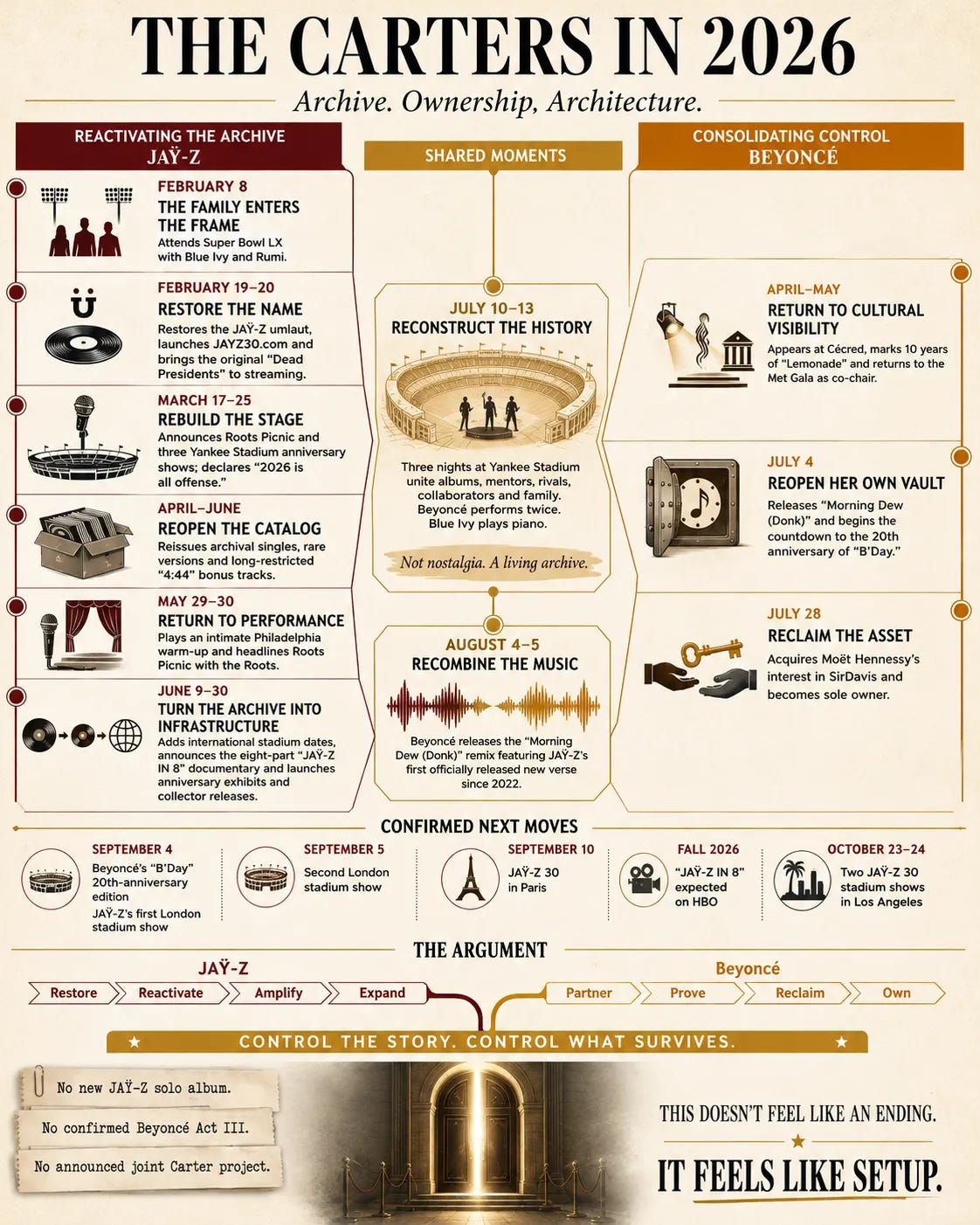
Since February, one or both of them has been unusually active: music releases, business moves, archive revivals, and high-profile appearances that feel less like promotion and more like coordination.
JAŸ-Z started the year at the Super Bowl with Blue Ivy and Rumi, then quickly restored the umlaut in his name, launched JAYZ30.com, and put early catalog material like “Dead Presidents” back on streaming. He followed with reissues and expanded physical releases.
This was not nostalgia. It was catalog reactivation, with history being reintroduced under his control.
Then the scale expanded.
He announced Roots Picnic, then two and eventually three Yankee Stadium shows for Reasonable Doubt and The Blueprint. He declared “2026 is all offense,” returned to live performance, added international stadium dates, and revealed an eight-part HBO documentary with Rick Rubin.
By summer, the archive had become infrastructure.
Beyoncé’s moves were fewer but equally strategic.
She appeared at Cécred, co-chaired the Met Gala, marked the Lemonade anniversary, and used a vault track, “Morning Dew (Donk),” to begin a countdown to B’Day’s 20th anniversary. She then acquired full ownership of SirDavis whiskey, taking control of the brand outright.
In August, she released a remix pack featuring JAŸ-Z’s first new verse since 2022, as reported by Pitchfork.
One was reactivating history. The other was consolidating ownership. Together, they kept appearing inside each other’s work.
So what are they doing?
Celebrating the past? Building toward Beyoncé’s Act III? Consolidating a family empire? Or simply operating at a level where everything becomes both art and infrastructure?
The answer may be in how they’ve always used attention: not to receive it, but to reorganize it.
The business has never been separate from the art
JAŸ-Z’s “I’m not a businessman, I’m a business, man” was not a line. It was a blueprint.
He built Roc-A-Fella because he could not get a fair deal, then used Def Jam, Roc Nation, and a series of ventures to expand beyond music into sports, fashion, liquor, and media.
Rocawear sold for $204 million. Tidal was acquired and later sold in a $297 million deal. Armand de Brignac became a luxury staple before a partial sale to Moët Hennessy. D’Ussé followed a similar pattern of shared ownership and strategic exit.
The pattern is consistent: convert cultural influence into enterprise value, then partially exit while retaining leverage.
Even “failed” platforms become valuable in different contexts. Tidal did not win streaming, but it still sold for hundreds of millions because it had strategic value beyond users.
This is not a side hustle. It is a system.
Which is why the archive matters. A dormant catalog is not dead value. It is reactivatable capital.
The umlaut is branding. The reissues are inventory. The stadiums are demand signals. The documentary is narrative control.
Nostalgia is just the emotional interface.
Beyoncé’s system is different, but equally controlled
Beyoncé is not adjacent to this system. She built her own.
Parkwood gave her full control over production, touring, film, and distribution. Ivy Park was fully absorbed when partnerships shifted. Adidas came and went. Control remained constant.
SirDavis extends that logic.
She launched it with Moët Hennessy, then later acquired full ownership, turning a partnership into a fully controlled asset. The Spirits Business reported on the acquisition, framing it as a decisive consolidation of her alcohol portfolio.
Where JAŸ-Z often builds and partially exits, Beyoncé tends to partner, prove, then consolidate.
He converts culture into liquidity. She converts partnerships into control.
Together, they look less like two solo empires and more like a coordinated family structure managing both narrative and assets.
Then I attended Night 1
Then I went to Yankee Stadium and ended up with more evidence than I needed.
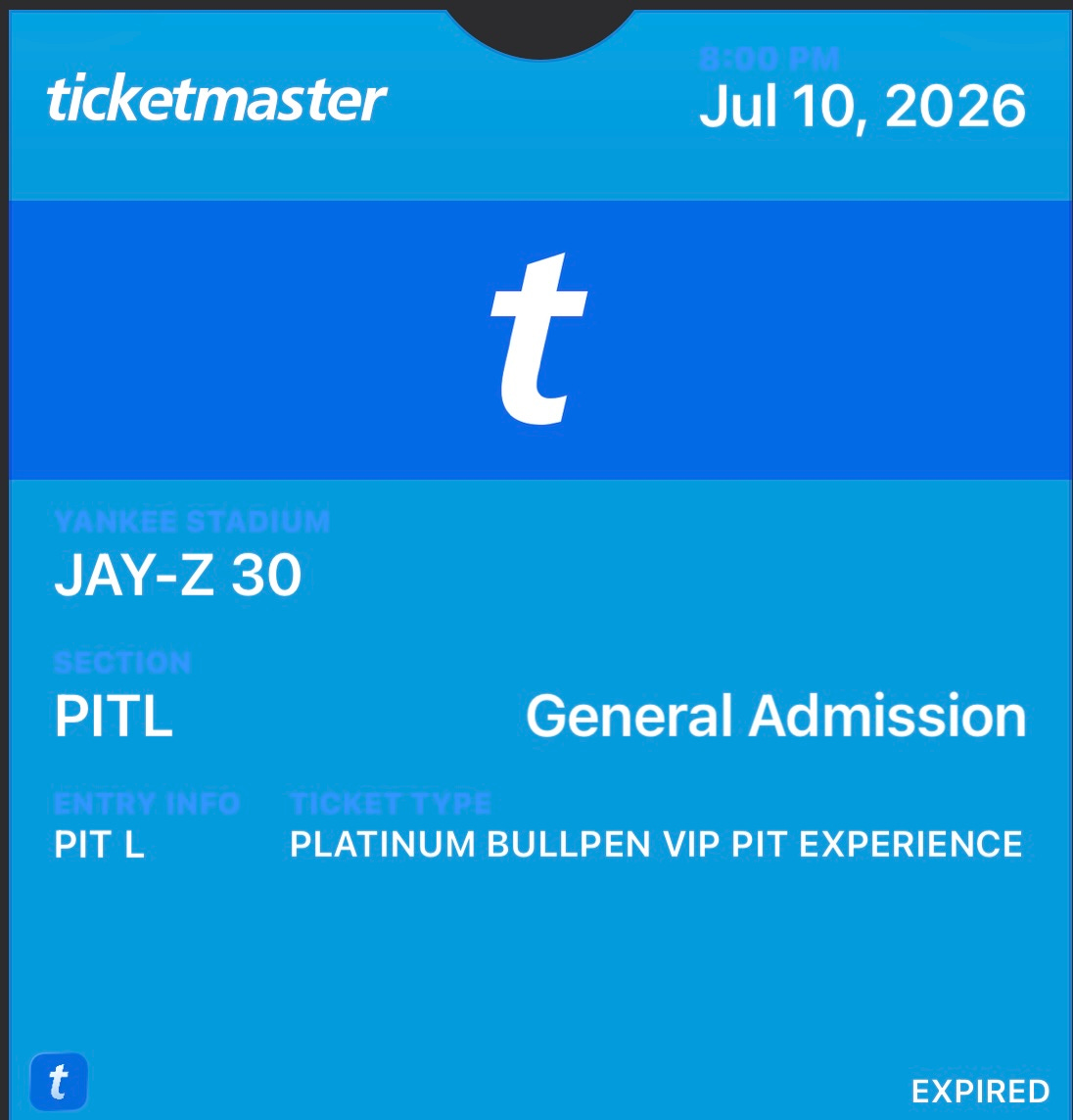
Beyoncé appeared early, singing Mary J. Blige’s part on “Can’t Knock the Hustle.” Nas showed up in a Mets jersey. Blue Ivy played piano. Jaz-O and Memphis Bleek reappeared. The show moved like a living archive.
I should have been satisfied.
I was not.
Because instead of clarifying anything, it made the pattern feel even more intentional.
Night 2 brought Slick Rick, Eminem, and Pharrell. Night 3 escalated into a full ecosystem: Rihanna, Usher, Clipse, Jeezy, Teyana Taylor, Fat Joe, Jadakiss, and Beyoncé again.
This was not nostalgia. It was reconstruction.
JAŸ-Z was not revisiting history. He was curating it in real time, deciding who gets placed inside the canon and how.
Blue Ivy at the piano was not just a moment. It was succession planning inside the archive.


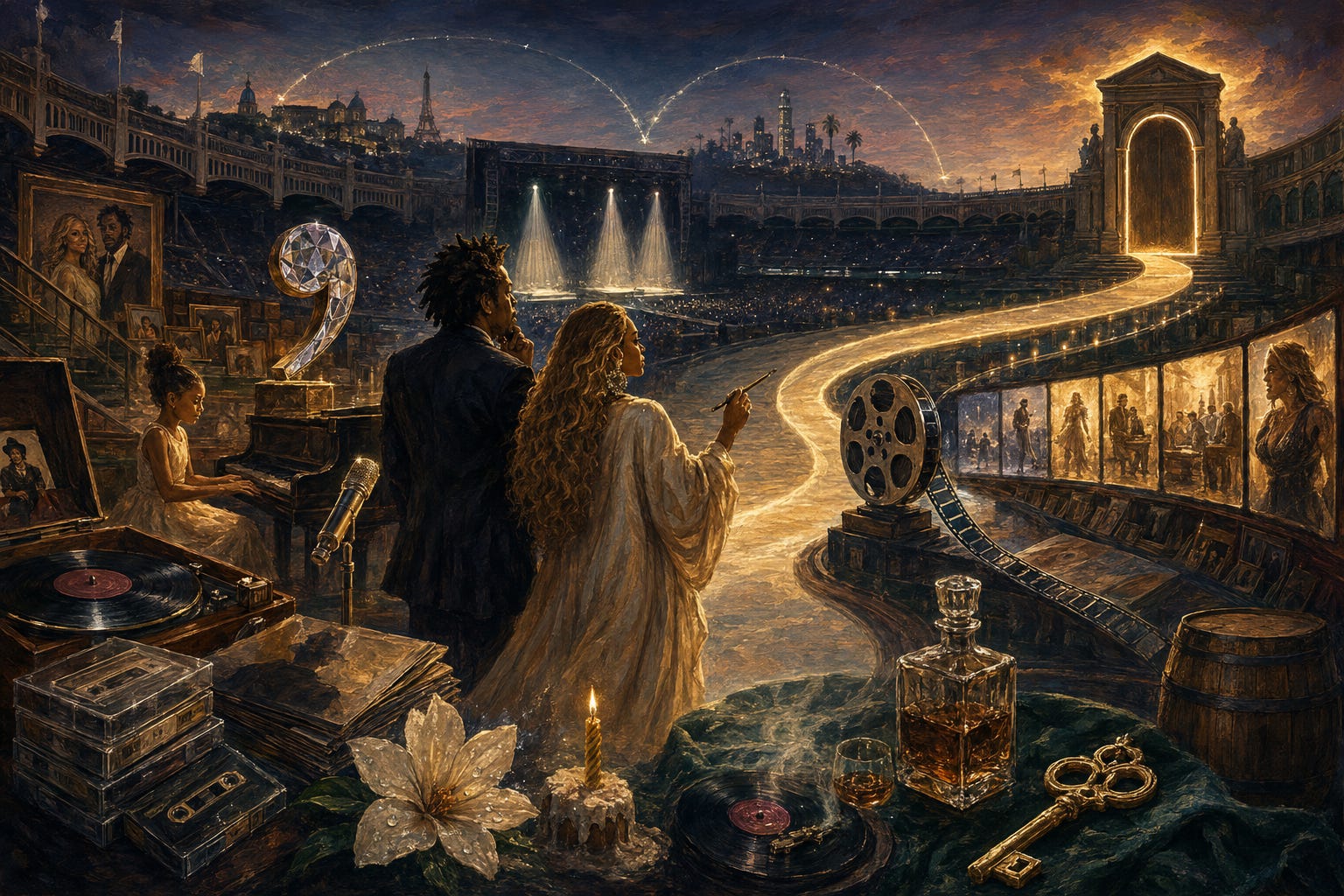
Look for the architecture
We are trained to see these as separate events: a concert, a remix, a whiskey deal, a documentary.
But together they form a structure:
Restore the name. Reopen the archive. Reclaim the assets. Rebuild the stage. Place the family inside it. Expand globally. Keep the ending open.
That last part is what matters.
The archive is active. The stages are expanding. The family is embedded in the work. The businesses are tightening into ownership.
But there is still no final reveal.
JAŸ-Z has not released a new solo album. Beyoncé has not revealed Act III. The collaboration exists, but it does not explain the direction. It deepens the mystery.
Maybe that is the point.
At this level, success is no longer about winning. It is about control: of narrative, legacy, and what survives you.
JAŸ-Z turns old albums into stadium events and living mythology. Beyoncé turns partnerships into fully owned systems and controlled releases.
Maybe there is no single announcement coming.
Maybe the movement is the announcement.
They are no longer being measured by culture. They are reorganizing it.
And still, something feels unfinished.
Act III remains unresolved. The archive is too active. The coordination is too precise. The timing is too deliberate.
This does not feel like an ending.
It feels like setup.
Night 1 did not give me answers. It gave me more evidence.
I left with gratitude, confusion, and less peace than I had when I arrived.
I do not just think the Carters are building toward something anymore.
I need to know what the hell it is.
And I am not the only one watching.