

I’ve been on that storied course in Augusta, Georgia twice. Both times while I was in college at UGA and we won’t discuss how long ago that was. The first time, my friends and I lucked into practice round tickets. The second was for a golf course architecture class when we got a personal tour from the Head Superintendent (the person responsible for every single aspect of that golf course). Both visits sit in my mind like they were yesterday. There’s just something magical about that place.
Even the superintendent carried himself like old money. We started asking typical maintenance questions like mowing heights, fertilizers they use, and the standard stuff you’d ask to get a deeper feel for the course. He told us they have a strict no-comment policy on everything they do. Not because it’s some guarded industry secret. It’s because nobody spends as much money on their course as Augusta National, and they don’t want public courses and local clubs around the country trying to copy them, destroying their own grounds, and then blaming Augusta National.
That’s about the time I started to realize what made that place so magical, and started paying attention to what you never see as a patron of the Masters.
There’s one detail from that tour that stuck with me over the years. The golf course is only about half the land the superintendent maintained. Adjacent to the course is a plant nursery with near-exact replicas of every iconic plant on the property, all the way up to some of the most massive pine trees. Why? If a signature tree gets struck by lightning on Monday, they can replace it before the Thursday broadcast. The viewers at home will never know.
Old money is not about what you see. It’s about what you don’t see.
That’s the framework for everything The Masters does, and why the tournament feels so different from every other major sporting event in America. The difference isn’t quality. It’s restraint.
They don’t want, or need, your money
A weekly tournament badge for the 2026 Masters costs $525 (that’s 6 days including the practice rounds, the Par 3 Tournament, and everything all the way through Sunday). People will pay triple and quadruple that for a 4 hour concert ticket these days. A four-day pass to the U.S. Open starts at $1,500.
It’s not just the tickets either. Concessions at Augusta National might as well be free. A pimento cheese or egg salad sandwich is $1.50, and the most expensive item on the menu is a $6 glass of wine. And this isn’t some off brand crap they bought at Walmart. It’s name brand everything and those sandwiches are as good as any I’ve ever had (and I’m from the south, I’ve had plenty). In a sports landscape where a beer at an NFL game costs $16, Augusta is clearly playing a different game.
They don’t need your money.
Now look at the access control. Every smart phone gets confiscated at the gate. Not “silenced.” Not “please be courteous.” Taken. If you’re caught with a recording device on the course, you’re removed and you’re never coming back. There’s no warning, no second chance. In an era where every live event is engineered around shareable, viral content, Augusta opts out entirely.
Even the language is governed. Did you notice I’ve been using the word “patrons” and not fans? That’s on purpose. Jim Nantz explained that CBS commentators are instructed never to use the word “fans.” The full word is “fanatics,” and that’s not what Augusta is about. The people walking the course are patrons. (I’m honestly surprised they don’t call them guests.) The broadcast itself runs limited commercials, which sponsors agree to in advance. The Masters streaming app is completely free (and is surprisingly good, coming from someone who’s built live sports streaming apps): no cable login, no registration, no account. Download and watch.
They don’t need your data, either.
What is old money?
People who are truly of old money don’t want or need your attention. Their defining quality and the thing that separates “wealthy” from “rich,” is restraint (at least in public theaters). If you’ve ever known someone who has more money than you can imagine (and then imagine more), you probably noticed they’re among the calmest people. They never talk about what they have. They don’t have to. You should already know, and they don’t really care if you do anyways.
That’s the window The Masters hands you, whether it means to or not. Once you see it, you may start to notice the pattern.
Old money sets the pace, they control the flow of pretty much everything. That’s the game they play. They don’t act like celebrities or influencers who will jump at people clamoring to give them free shit. That’s a sales game, where popularity matters. They don’t act like people with new money who will hustle to get a celebrity onto their yacht for photos, so they can leaked them to the press and know requests for rentals will go through the roof. Old money is the bank that funded the construction of the yacht in the first place.
It doesn’t matter how much something costs for true old money. Not only do they not have to ask how much it costs, it flat out doesn’t matter to them. That’s why they never talk about money or flaunt what they have.
And that’s the pattern to watch for: The restaurant with no sign on the door. The company that never advertises. The person at the table who talks the least and gets listened to the most.
Premium rooms don’t announce themselves. They don’t need the foot traffic. They’re not optimizing for conversion.
The flex isn’t what’s on display. It’s what’s been made invisible: the nursery behind the course, the infrastructure behind the calm, the money behind the $1.50 sandwich. You’re not meant to see the machinery. You’re meant to feel the effect and wonder how it all works so smoothly.
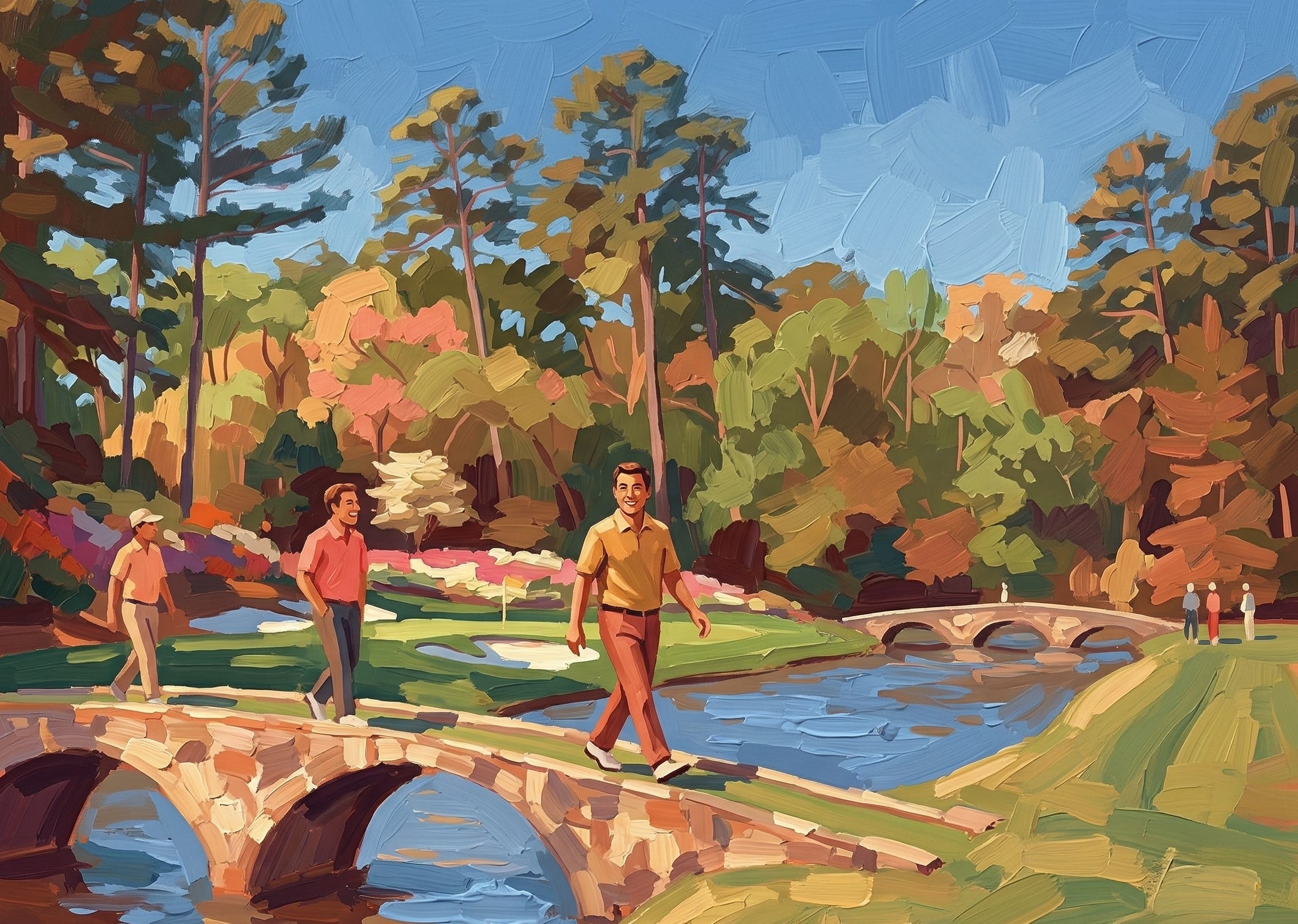
None of us will ever join Augusta National. We’ll never walk across the member and player only bridges. But knowing what you’re looking at when you watch this week? That’s the takeaway. The most powerful rooms don’t look powerful. They look easy. And that ease is the most expensive thing in the building.