

What we carried this week…
This week had a recurring shape: ownership.
Not just who made the thing. Who owns it now. Who profits from it. Who gets to decide what it becomes once it starts making money, shaping taste, or carrying cultural weight.
Salt-N-Pepa are fighting to reclaim their catalog while UMG argues the rules do not work the way the group thinks they do. SAG-AFTRA reached a tentative deal with the studios, but the deeper fight remains the same: who owns your face once the machine learns it? CNN is being circled by billionaires. Pablo Torre won a Pulitzer after leaving the machine. And Taraji P. Henson called out the Bezos-backed Met Gala, which helped clarify, again, that culture is often just infrastructure in a better outfit.
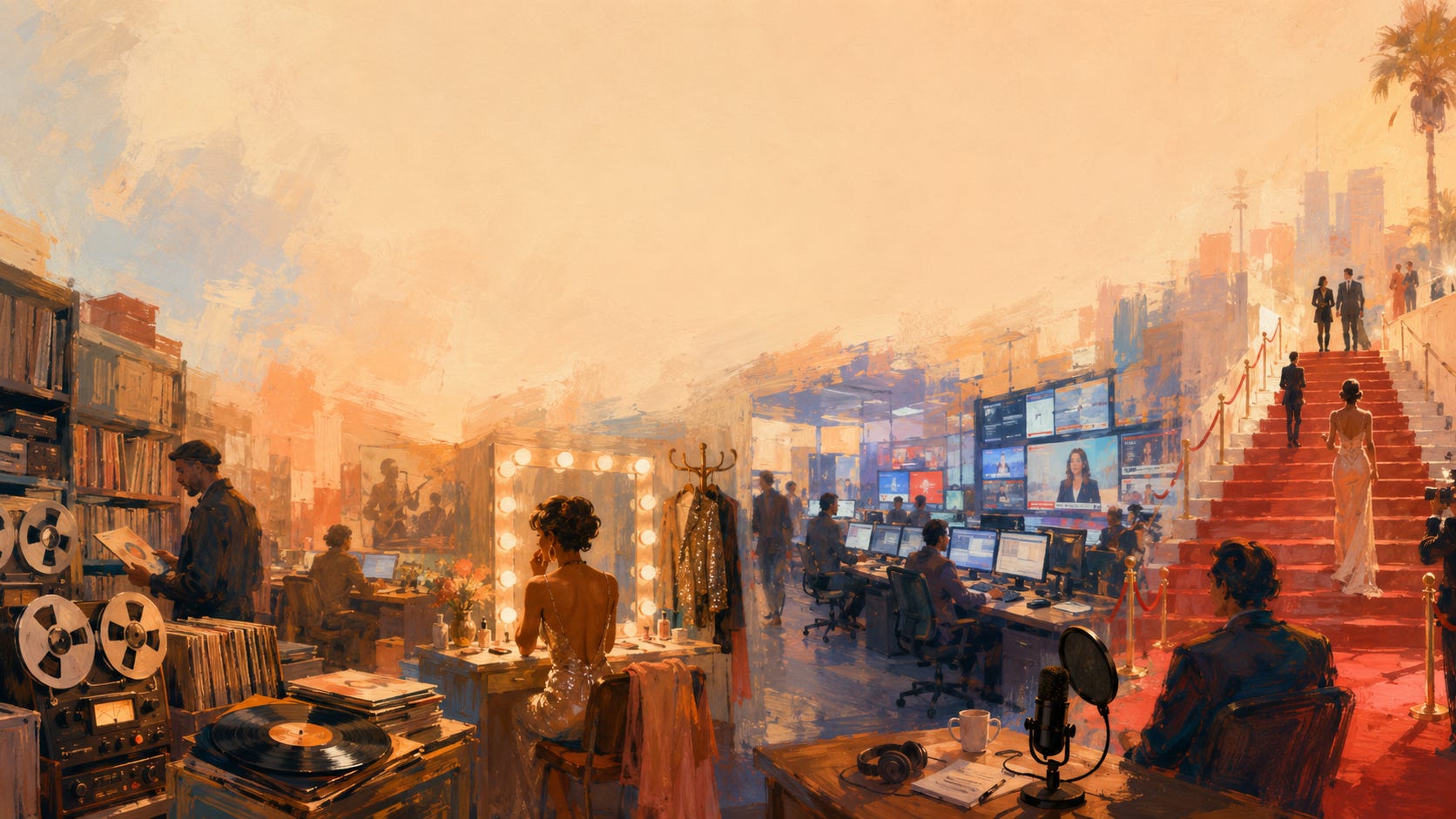
Different stories. Same fight.
Salt-N-Pepa and the legal machine
The Salt-N-Pepa story is the cleanest version of the week. UMG is arguing that the group’s effort to reclaim ownership of their music has a “foundational deficiency,” which is lawyer language for: yes, we know why these rights exist, but we would prefer they not inconvenience us.
That is the thing about ownership fights in culture. Everybody loves artists while the work is being made. But once the songs become a catalog, once the catalog becomes an asset, and once the asset becomes dependable revenue, the artist starts getting treated like a sentimental detail in somebody else’s balance sheet.

This is not just a story about one group. It is about who gets to keep profiting forever from work someone else made valuable in the first place.
SAG and the future body
The SAG deal matters. But what makes it feel bigger than a normal labor story is that the fight is no longer just over pay. It is over whether your likeness can become a reusable corporate asset after you leave the room.
That is a different category of labor problem.
The old studio dream was simple: own the movie. The new one is more ambitious. Own the face. Own the voice. Own the training data. Own the reusable self. Salt-N-Pepa are fighting for the past version of ownership. SAG is fighting over the future version. Same war, new software.

Buying the Switchboard
The CNN story this week was clarifying in the bleakest possible way. Between the Ellisons closing in and Barry Diller making it known he would buy CNN if he could, the network is now being discussed less like a news organization and more like a trophy with a control room attached.
Ted Turner is barely in the ground, and already the company he built is being talked about like a collectible.
That should bother more people than it does. Because nobody is circling CNN out of sentimental concern for journalism. They want the brand, the archive, the reach, the prestige, and the ability to stand closer to the machinery that still helps shape the national conversation.
Techno-kings and the room they think they own
If the CNN story is the scene, Journalism in the Age of Techno-Kings is the theory.
Because the problem is not just that billionaires keep circling news organizations. It is that more and more of them seem to understand media ownership not as a business challenge, but as an ideological instrument. The point is not always profit. Sometimes it is leverage. Sometimes legitimacy. Sometimes it is simply the pleasure of owning the room where other people used to criticize you.
That is why the ownership question keeps swallowing everything else. Once the billionaire enters the frame, every other conversation starts acting like a secondary concern. Staffing becomes secondary. Editorial courage becomes secondary. Even truth starts having to clear strategy first.
The techno-kings do not need to win every argument. They just need to own enough of the room that everyone else starts dressing for their weather.
Pablo Torre and the talent drain
One of the more satisfying stories this week was Pablo Torre winning a Pulitzer, because it doubles as a receipt.
Not just a receipt that he is great at what he does, though he is. A receipt for the failed logic of legacy media.
A lot of major outlets have their own Pablo Torre somewhere in the building: clearly brilliant, clearly curious, clearly capable of more than the format around them allows. And then everybody acts surprised when the best version of that person’s work happens later, somewhere else, after they leave.
Institutions love talent in manageable doses. Smart enough to energize the brand. Not so ambitious that it disrupts the schedule. That is how you end up wasting people until they go build in public and win anyway.
The Met Gala is not a party
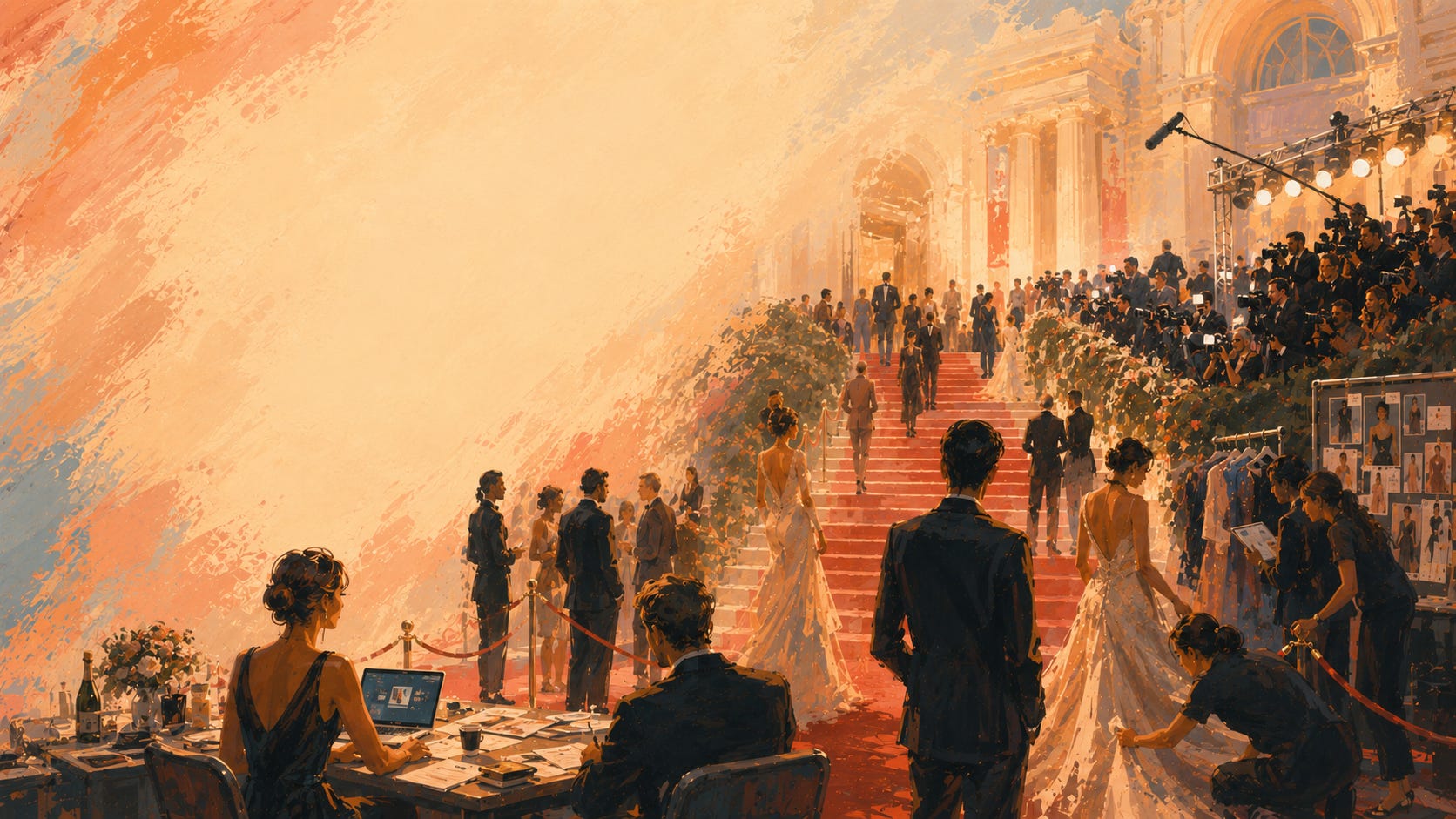
Will’s read on the Met Gala was right: the Met Gala is not a fashion event that happens to get covered. It is a media product that uses fashion as content.
That distinction matters.
The easiest way to misunderstand the Met is to think it is just a rich-people costume party with cameras. It is not. It is a machine. The attendees are the talent. The theme is the brief. The styling is the packaging. The press is the amplification layer. The internet does the rest by arguing about who understood the assignment and who looked like they lost a bet.
And once you see it that way, the whole thing stops looking like indulgence and starts looking like infrastructure. Which is also why Taraji P. Henson’s criticism of the Bezos-backed event landed so sharply. The glamour is real, but so is the capital stack underneath it.
That is the pattern again. Once enough value flows through a room, someone powerful decides the room itself matters more than whatever art brought people there in the first place.
We’re still standing
So maybe that is the week.
Not just labor stories. Not just media stories. Not just culture stories.
Ownership stories.
Stories about what happens after the thing has already been made, after the audience has already shown up, after the culture has already declared something meaningful. That is when the paperwork arrives. That is when the asset language starts. That is when the people holding equity step forward and begin explaining why they, not the artists or journalists or workers, are the natural stewards of what comes next.
Sometimes they are right. Often they are rich. Those are not the same thing.
This week kept asking the same question in six different outfits: who owns the value once someone else has done the work to create it?
Too often, the answer is whoever got to the table first with a lawyer, a balance sheet, or a board seat.
And then everybody else gets asked to be grateful they were invited into the room at all.
— Will, Steph, & Jamie
Links from this issue: