



You know those weeks where you look around and wonder if everyone is just collectively trying to remember how to be a person?
That’s what this week felt like. We’ve got a local newspaper trying to replace its actual reporters with robots, a musician getting booted from an arena tour for having a political opinion, and a video game that has somehow become the only place anyone discovers new music anymore. Oh, and a twelve-year-old murder case that proves why we still need humans asking questions.
When you put it all together, it’s not just a random assortment of headlines. It’s a week about protecting human agency. It’s about fighting the algorithms that want to write our news, the promoters who want to police our speech, and the platforms that want to replace human curiosity.
Let’s get into it!
THE HAUL
1. The fight against AI journalism is a fight for free will.

The McClatchy newspaper chain is systematically replacing local reporters with AI-generated content. It is a cost-cutting measure disguised as an efficiency pivot. The newsroom union is currently fighting back, attempting to draw a hard line against the automation of civic information.
The substitution of local reporters with AI isn’t just a labor dispute. It is the systematic dismantling of the community trust required for real journalism to function. A functioning democracy relies on shared, verified facts. The automation of local news creates information deserts where constructive political discourse becomes impossible. You cannot hold a city council accountable with a large language model that hallucinates quotes.
The union’s fight against McClatchy’s algorithmic replacement is a blueprint. This is how knowledge workers use collective action to protect human agency from corporate automation. It is a fight for free will against the manufactured narrative that AI replacement is inevitable. If the people who write the first draft of history are replaced by software, we lose the shared reality necessary to govern ourselves.
The algorithm doesn’t care about your property taxes. It doesn’t care if the mayor is corrupt.
Further reading: CJR on McClatchy’s post-layoff future
2. Venue monopolies make censorship quiet and efficient.
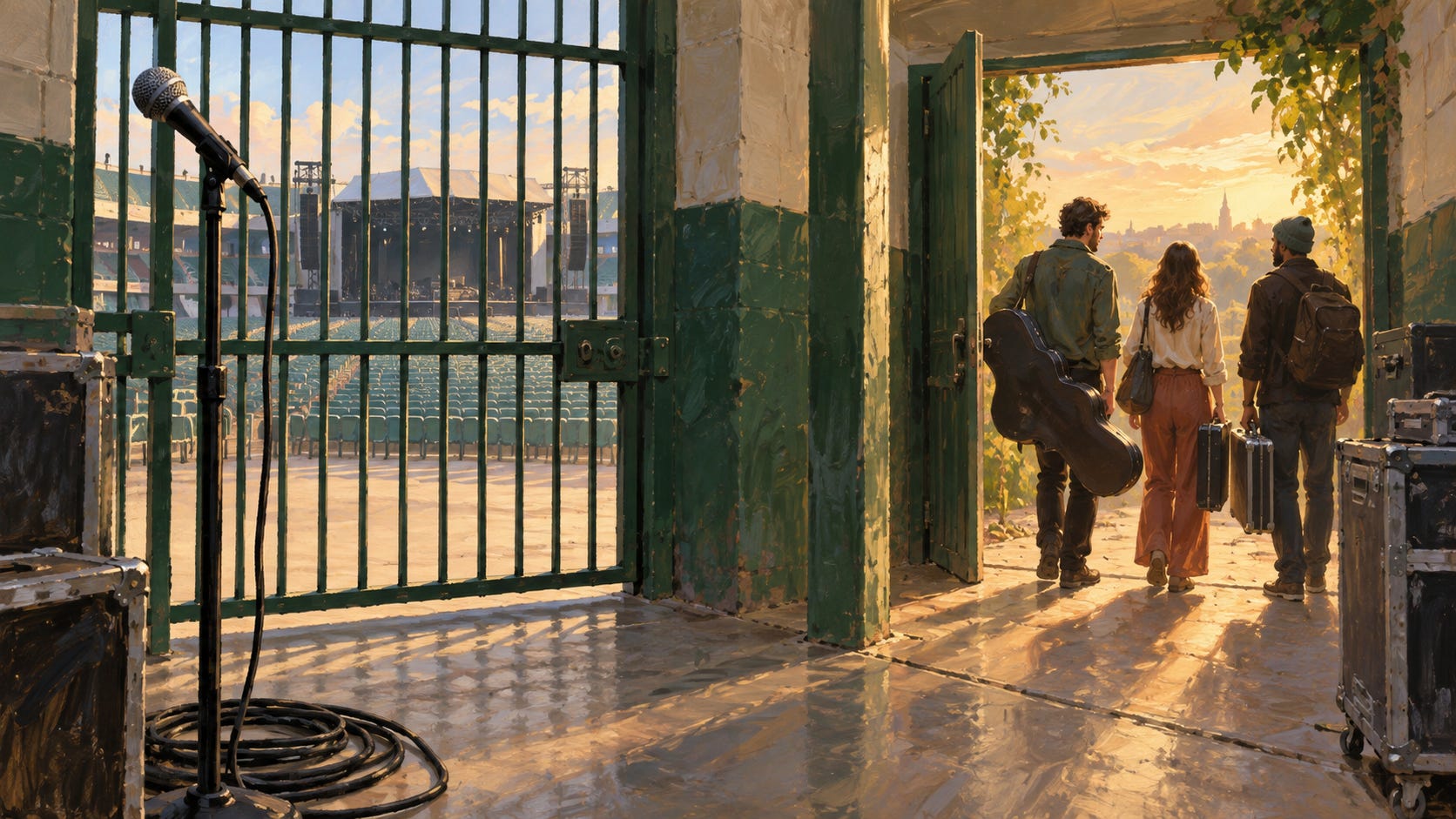
Macklemore was removed from Ed Sheeran’s stadium tour following his pro-Palestinian remarks. Sheeran’s other supporting acts and his backing band, Beoga, subsequently withdrew. Macklemore then pledged to donate his $1 million in tour earnings to organizations supporting Palestinians.
Sheeran said the removal was the promoter’s decision after venues threatened to pull shows. Robert Kraft, whose company owns Gillette Stadium, defended his position by citing concerns about what he described as antisemitic rhetoric and imagery. Those are the stated accounts and objections behind the dispute, not interchangeable descriptions of what happened.
At his September 19 show in Philadelphia, Sheeran apologized for his handling of the controversy and condemned the treatment of people in Gaza. That development belongs in the story too, even if it does not resolve the questions raised by Macklemore’s removal.
The dispute reveals how many people can influence what happens on a stage without ever stepping onto it. An artist has an audience, but reaching that audience at stadium scale also depends on venues, promoters, contracts, and the willingness of those parties to keep a show on the calendar.
Calling that arrangement a monopoly requires evidence about ownership and market control. We don’t need to make that claim to examine the power at work here. A venue’s decision about who may perform can carry consequences well beyond one evening’s lineup.
The withdrawals also matter. Other performers made their own decisions about whether to continue, extending the consequences beyond the artist who was removed. Macklemore’s donation pledge was a separate response, directing tour earnings to a cause he supports.
The question is bigger than whether music should be political. It is who gets to decide what an artist may say, and what everyone else does when that decision is made.
Further reading: Billboard on the tour removal · Pitchfork on the crew resignations
3. Is True Crime the last megaphone for local journalism?
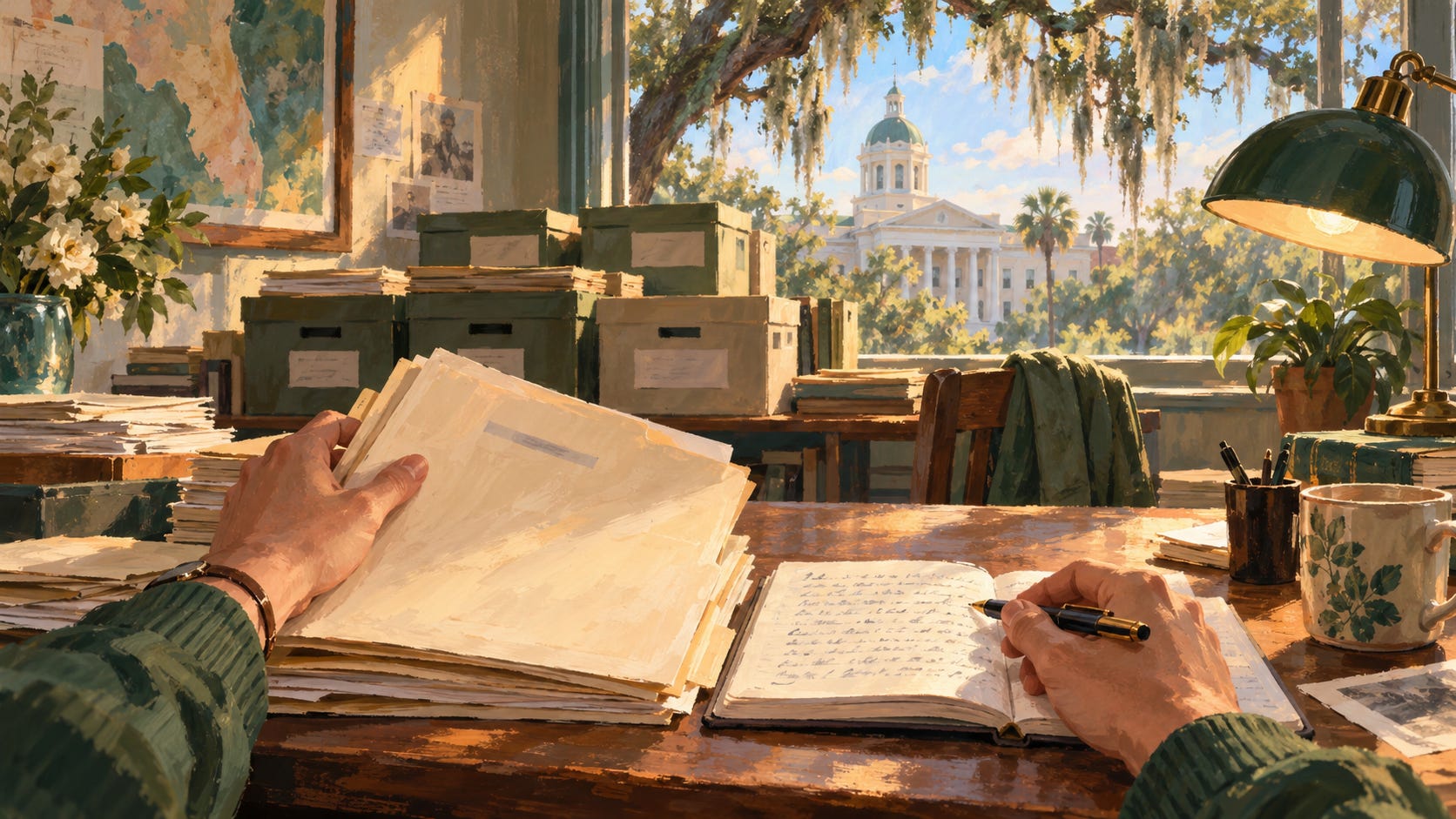
Hulu’s four-part docuseries Welcome to the Family: The Murder of Dan Markel, which premiered September 1, revisits the 2014 murder of a Florida State University law professor and the lengthy investigation that followed.
The case involved a murder-for-hire plot rooted in a bitter custody dispute. Markel’s former brother-in-law, Charlie Adelson, and former mother-in-law, Donna Adelson, were convicted in connection with his killing. His ex-wife, Wendi Adelson, has not been charged and denies involvement. Those distinctions matter, especially in a story where the family name can become shorthand for individual criminal responsibility.
What interests us is the distance between the finished documentary and the years of work behind the case. A series can organize events into four episodes. Investigators, witnesses, attorneys, family members, and reporters lived through a process that did not arrive with a clear narrative or a convenient ending.
Local reporting and criminal investigation serve different purposes. Reporters do not prosecute cases. They help the public follow them, scrutinize official decisions, and understand what a hearing or verdict actually means. That work has value even when there is no documentary crew or national audience watching.
Further reading: Hulu’s Welcome to the Family · Tallahassee Democrat’s coverage (Paywall)
4. The digital stadium is the new radio.

Grand Theft Auto VI just debuted six new tracks from major artists, including Travis Scott and PinkPantheress, embedded directly into the game’s launch material.
Video games are yet another replacement for radio and MTV as the premier music discovery engine. Did you know they even do full-on concerts inside Fortnite? Video games are allowing a new generation to discover tracks through interactive immersion rather than passive listening. Major labels are restructuring release strategies around AAA game launches. They are treating games like GTA VI as digital stadiums that offer far more captive attention than a Spotify playlist.
It is the ultimate platform pivot. Artists aren’t just dropping singles anymore; they are scoring the worlds we choose to live in.
Further reading: Pitchfork on the GTA VI soundtrack
The Takeaway
When you look closely at the week’s news, the pattern comes to the surface. The systems we built (newsrooms, tours, streaming platforms) are all trying to automate or sterilize the human experience because it’s more cost effective and easy to repeat. Reclaiming that experience requires active resistance. You have to fight for your local news, you have to walk away from the arena, and you have to actively seek out the truth when the algorithm stops delivering it.
That’s the haul. See you next week.