


Almost everything in this issue comes down to who controls what you get to see. A24 is helping Google build the next camera instead of buying whatever tech decides to sell it later. A couple locked a thousand phones in a box at Madison Square Garden, so their wedding could only leak on their own terms. A chip in a World Cup ball felt a touch no human eye could catch, and changed the outcome of a game. Comcast stared at the empire it spent twenty years bundling and decided the bundle was the problem. And Serena walked onto Wimbledon with nothing left to prove, controlling nothing, looking happier than she has in years.
Let's get into it.
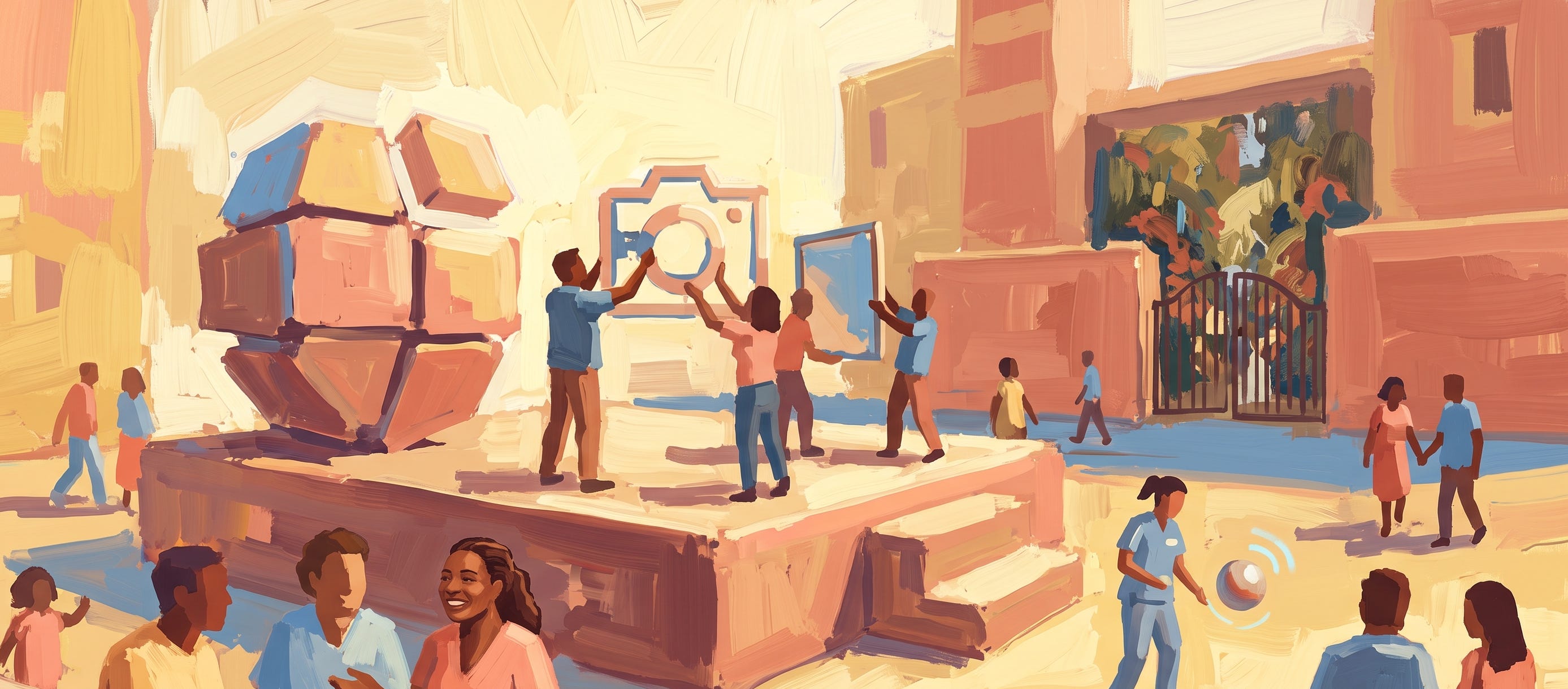
A24 & Google are bringing AI to filmmaking
On June 22nd, A24 announced a research partnership with Google’s DeepMind Lab, tied to a $75M investment from Google. A24’s public face of the deal is Scott Belsky, who joined in early 2025 to “build filmmaking tools and drive tech initiatives.” This wasn’t a whimsical partnership that appeared out of nothing or is A24 chasing a passing fad.
When digital cameras replaced film, purists hated it. But the physics of capturing light had changed. Most notably in that transition, capturing motion pictures got much less expensive. By partnering directly with the engineers at Google, A24 is choosing to help build the new camera rather than buying whatever the tech industry decides to sell them later. Importantly, none of this necessarily means AI will become part of the A24 brand itself. If anything, the strategy appears to be keeping the technology behind the curtain while protecting the filmmaker-first identity audiences already trust.
To put it politely, there’s been some backlash among the die-hard A24 fans. They feel the company is sullying its brand, which was built as a sanctuary from the sterile and algorithmic factories of Corporate Hollywood.
Why would a company whose brand is largely built on story and artist-driven work decide to go in so deeply with AI (which is the pure antithesis to story and artist-driven work)?
If you have control or a stake in the hardware, you can theoretically protect an artist’s intent in their process. A thing which A24 is quite well known for.
Commercially, this fan reaction will barely dent them. They have Backrooms momentum, an Elden Ring film shooting, and a strong slate. Filmmakers will keep working with them because A24 still writes checks and wins awards. The real cost is to the mystique. As IndieWire put it, they’ll have no trouble making films, but they “suddenly feel a lot less cool.”
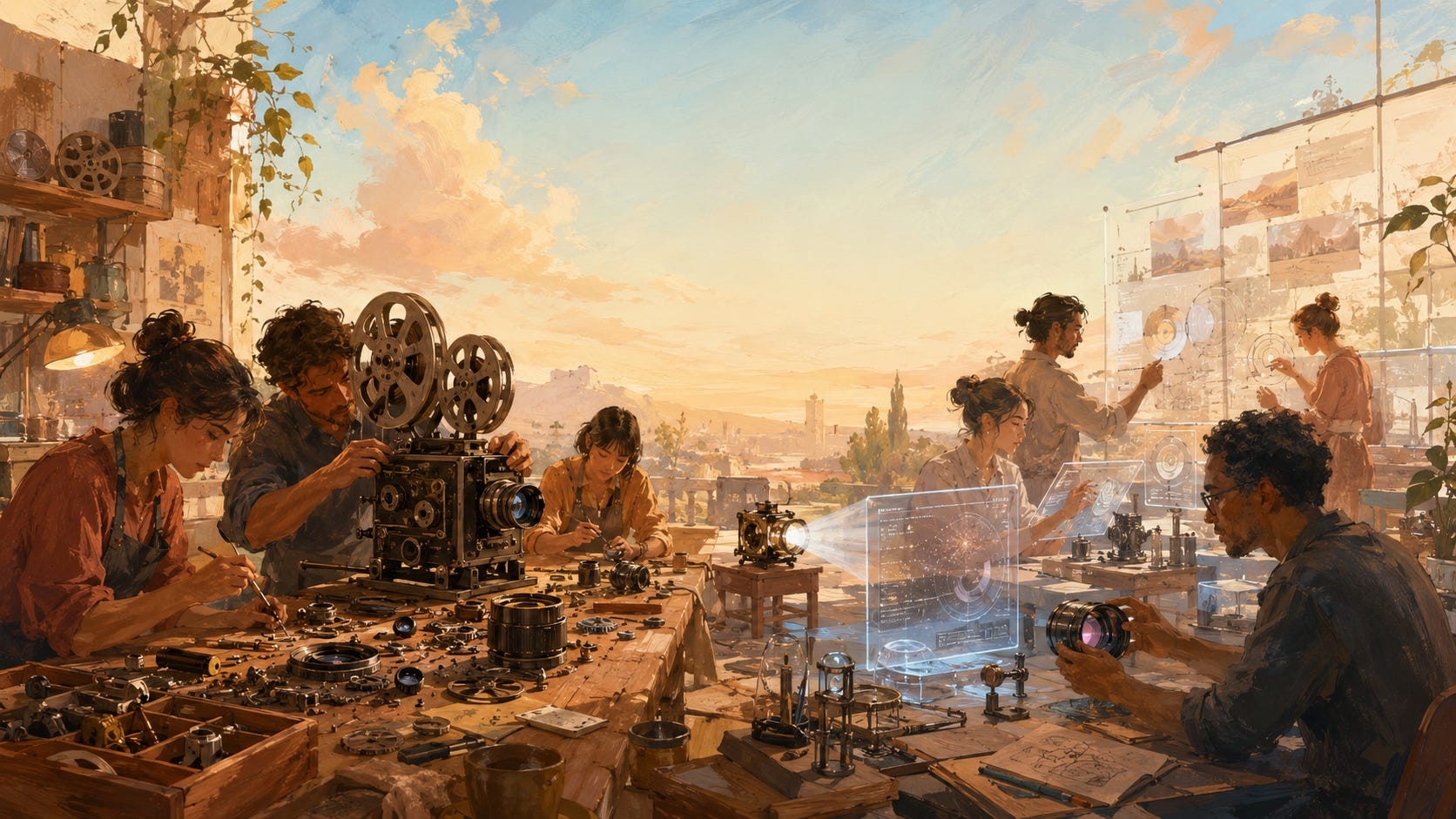
A24 is betting that the audience’s love for a good story will outweigh the ideological hatred of all-things-AI. It’s a tension seen everywhere these days. Some of us have some faith that A24 will do this the right way. They have shown time and time again that they’re dedicated to the craft of creating high-quality movies, not just pumping out slop for profit.
Comcast breaks up with itself
Comcast announced that it is splitting into two public companies. NBC, Telemundo, Universal’s film and TV studios, Peacock, Bravo, Sky, and the theme parks will spin off into their own company. Comcast keeps Xfinity, Xfinity Wireless, and Comcast Business. Investors loved it and the stock jumped more than 20% in premarket trading and held a 5% gain by the close the day after the announcement.
After twenty years of building the biggest bundle in media, Comcast just bet that the full vertical tech-and-content bundle was the thing holding down its stock price. Two years ago “integrated” was the whole plan; cable, content, and delivery under one roof so you couldn’t leave. Now Comcast is the one leaving. This is interesting news coming on the heels of Fox's purchase of Roku and Paramount Skydance’s acquisition of Warner Brothers Discovery.
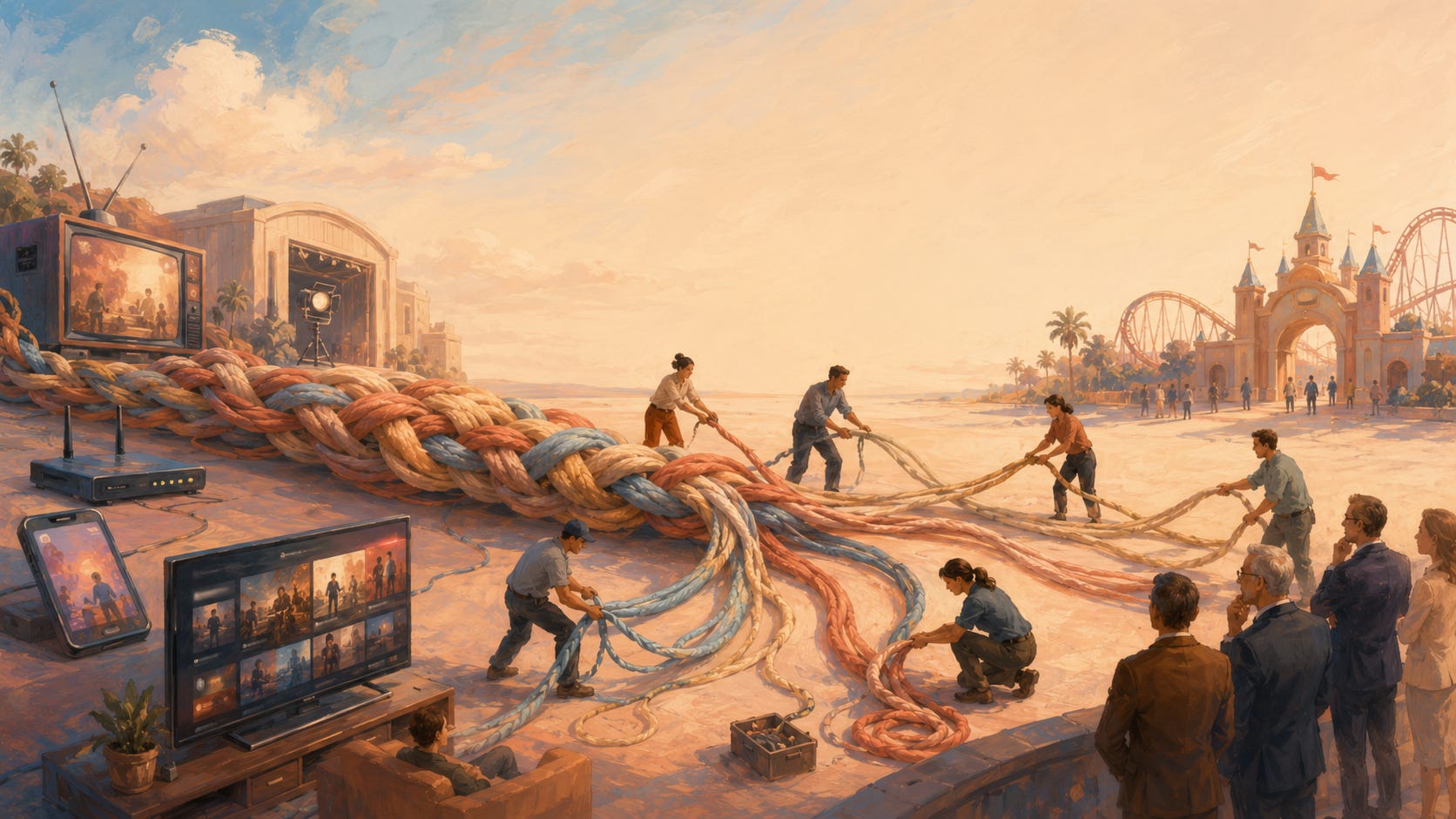
We’ll happily guess wildly at who ends up interested in buying a standalone NBCUniversal once the spinoff closes next year (we open the bidding at, maybe Paramount?). One thing is for sure, everyone is either getting a lot bigger or a lot smaller right now, and nobody’s staying the same size.
The Williams’ at Wimbledon
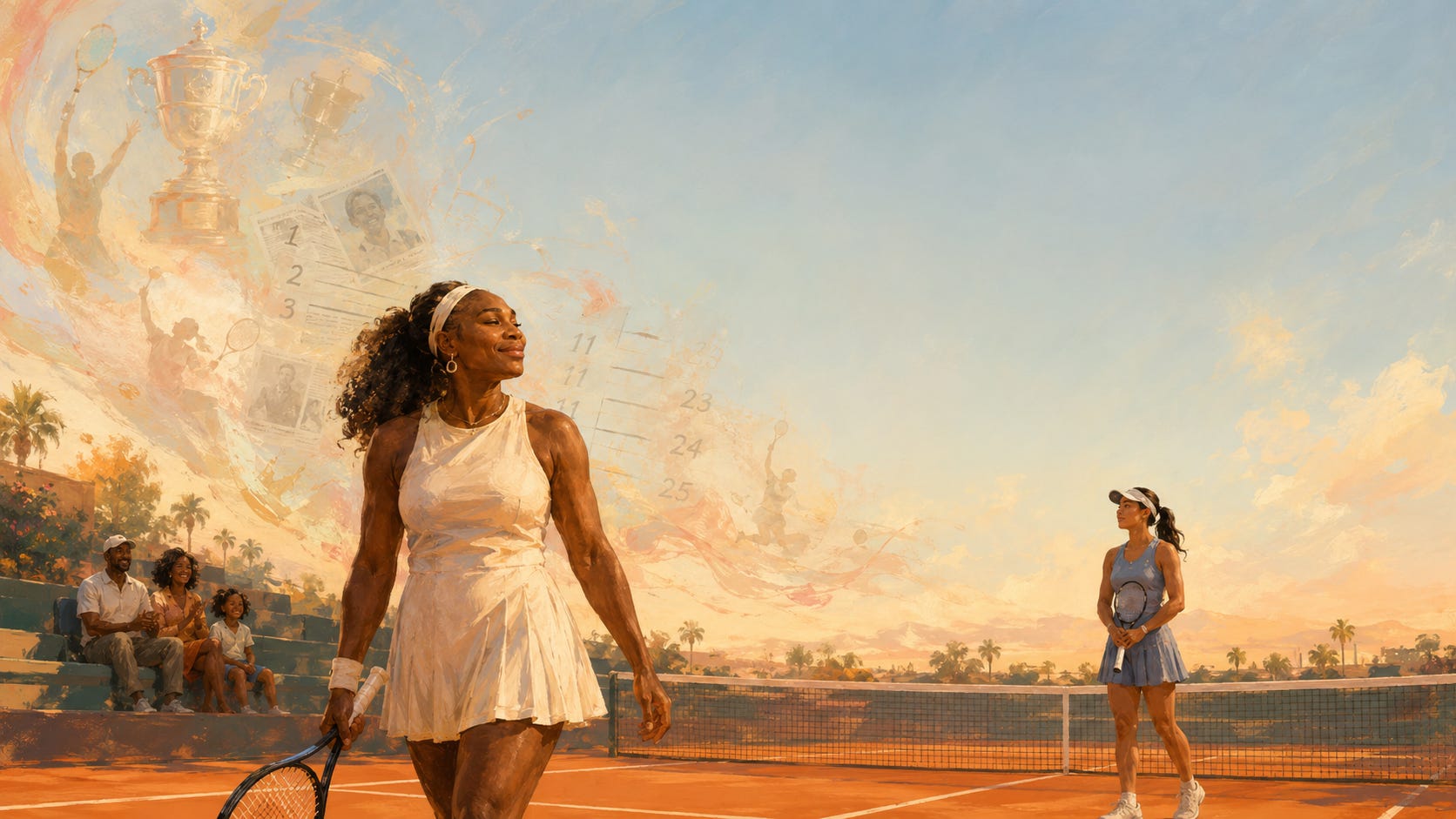
Serena Williams lost her first Wimbledon singles match in four years on Tuesday, falling to 20-year-old Maya Joint 6-3, 6-7(6), 6-3. She saved a match point with a 122-mph serve to force the second-set tiebreak, then Joint closed it out by winning five of the last six games.
The match was unusual to watch, mainly because it wasn't easy to process quickly. We deliberately avoided reading any commentary afterward. Nobody wanted Stephen A. Smith’s take of “this is a travesty" to influence what was a fascinating moment.
What stood out: Serena looked happy. With nothing left to prove, she got to just play tennis in front of her kids (which is precisely what she said in a press conference). And for someone with her legendary career, it’s notable that she said “play” and not “win.”
Joint, on the other hand, was tricky to read. She doesn’t have the exposure to the game that casual tennis fans do, but she looked like someone holding back. The look on her face read like someone who knew she was being a little bit naughty (and thoroughly enjoying it).
The one truly sad part of the whole thing, which most viewers missed while watching live, was that Serena tweaked her right knee late in the first set.
Venus and Serena were set to play their first doubles match this weekend, but the injury forced the sisters to withdraw. Serena is heartbroken, we assume Venus is too, and so are fans around the world. We hope she feels better soon. It was a pleasure to see her play again, and Jamie, Steph, and Will are happy to take a rain check for that doubles match. Maybe they’ll pop up at the US Open.
The English & P.E. Teacher got married... in MSG?
Friday, black SUVs slid up to Madison Square Garden and unloaded a thousand guests into a locked-down arena. Phones taken at the door. Adam Sandler officiated, Dior did the dress, and the room was rebuilt into a “secret garden” nobody outside could photograph.
The story isn’t the marriage. It’s that two people booked an arena, locked up a thousand phones, and turned their own wedding into IP nobody else could sell first.
That’s the Taylor (and Tree Paine) move. Her rarest skill was never the songwriting; it’s owning the narrative and the footage. Control who’s in the room, control who’s holding a camera, control when the images drop and on whose terms. A wedding nobody can leak is a wedding she gets to release.
Perhaps Will’s reaction what that of an aging romantic. He thinks weddings are for the people who raised you, your relatives, your found family, and close friends. It’s a special celebration of the joining of your life and your partner’s. But, he is also very aware that he is not Taylor Swift.
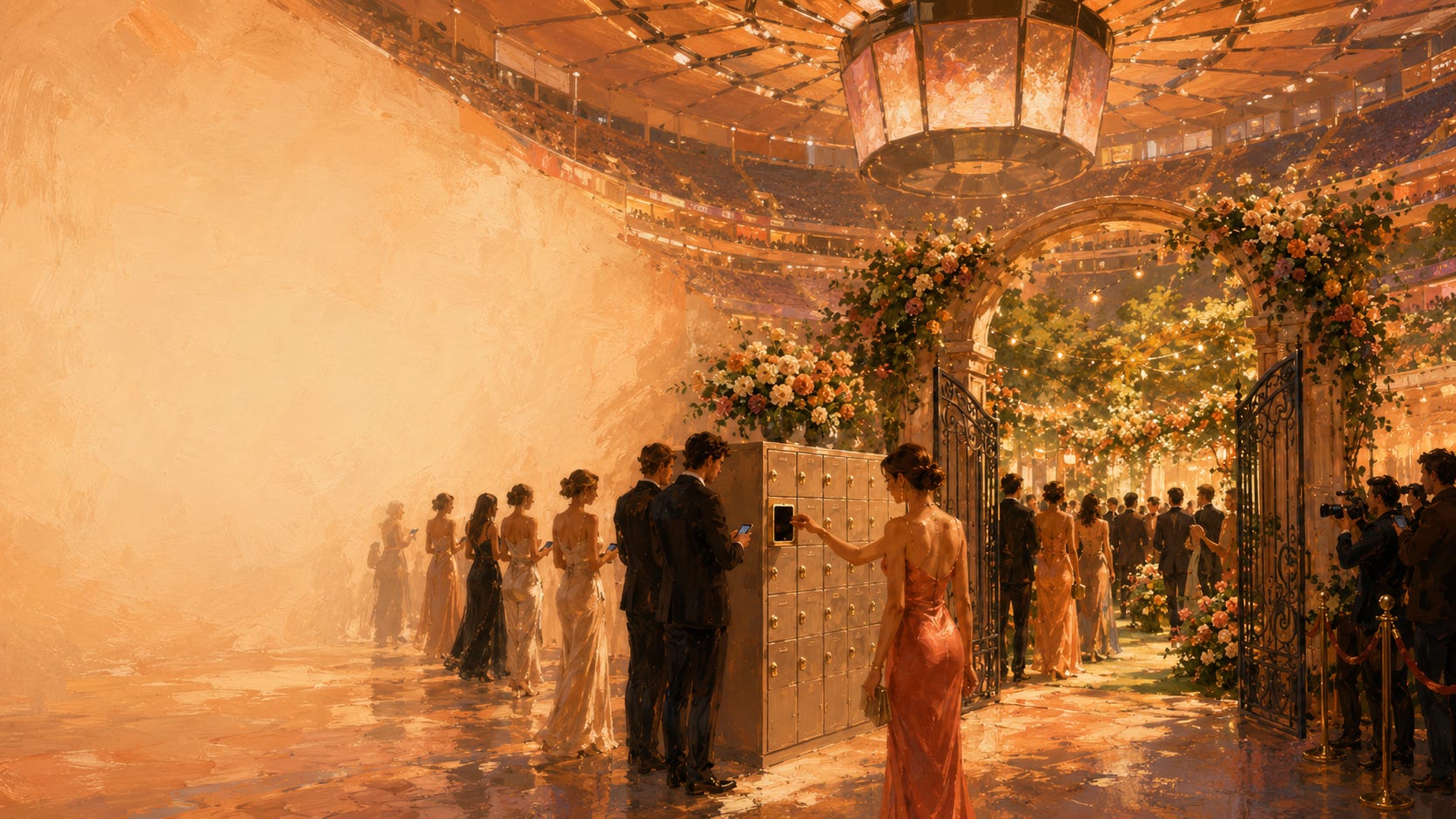
Will’s wild bet? Give it a year, and we’ll all be “joining the festivities” at a theater near you. Taylor: The Wedding.
VAR-Maxxing; the ball has a heartbeat now
Surprise surprise, the officiating at the World Cup has been highly controversial. It’s a mess again, but this year the villain isn’t a bad ref, it’s a good chip.
Croatia scored a stoppage-time equalizer against Portugal. Then the ball’s sensor caught a touch off Igor Matanović’s hair, which is invisible on every replay to the human eye. This grazing touch put a teammate offside, who was entirely onside when the original ball was played. The goal was gone. Croatia out. FIFA even named the readout: a “heartbeat graphic,” lifted from the tech cricket uses to hear a ball nick a bat.
The call was technically correct. It also felt like a robbery. When the ball feels a touch no eye can see, “right” and “fair” stop being the same thing. The crowd is reacting to a truth it physically can’t perceive. And that gets to the question we’re wrestling with;
If a human eye can’t see it, should it be allowed to decide the game?
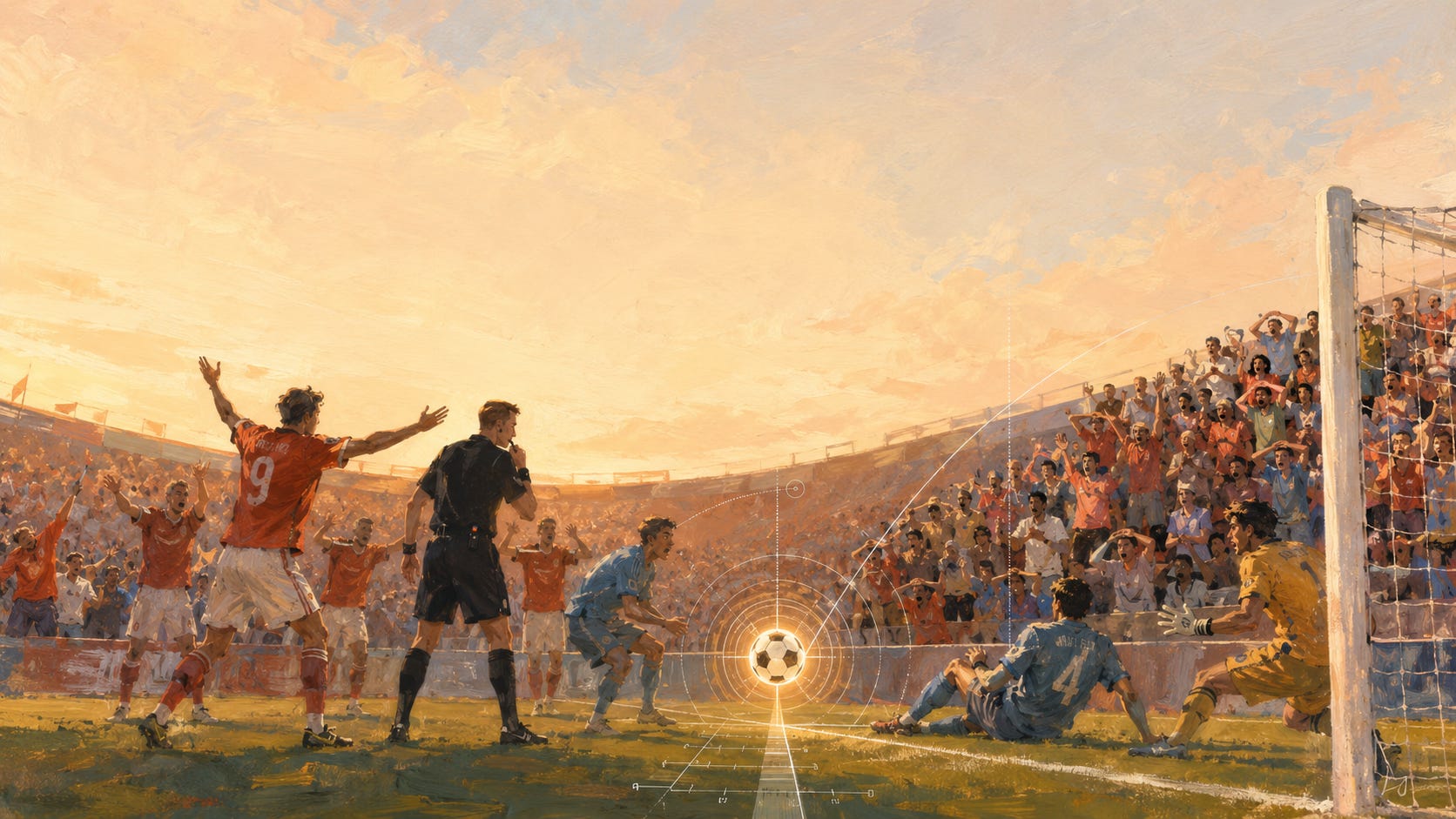
Not because accuracy is bad, but because sports run on what we see and hear. Sports are inherently about the fan experience. If the fan can’t visually or audibly experience the faint graze that triggered an offside penalty, did the graze really happen at all?
And the chip is coming everywhere. The NBA’s already testing one.
That's the Haul. Nobody planned the theme, but it's hard to unsee once you catch it: the camera, the footage, the chip, the bundle.
Everyone's grabbing for the frame. We'll keep watching who's holding it and who just lost it.
See you next week.
-Steph, Will, & Jamie