

In the Eastern Time Zone during the summer, 12 noon on my Apple Watch is actually closer to 1:30pm by the sun. Solar noon (the moment the sun is highest in the sky) doesn’t happen until mid-afternoon. When my clock says “lunchtime,” my circadian rhythm is saying “nap time.” When I hit the 2pm wall, my body thinks it’s 3:30.
I’m not lazy. My body is just still paying attention to the sun, and our clocks stopped doing that a long time ago.
You used to live by the sun. Everyone did.
Picture a medieval village. Nobody owns a clock. Why would they? Each day has a rhythm set by light: you get up at dawn, eat when the sun is overhead, stop when it gets dark. A monk watches shadows on a sundial and decides when to ring the bell. Those bells tell you when to pray, when to eat, when to come in from the fields.
The bells in your village don't need to match the bells in the next village over, because you're never going to both villages in the same day. Time is local because life is local. It works for centuries.
Now look at what we replaced that with.
We have an atomic clock in Colorado, NIST-F4, so precise that if it had started running 100 million years ago it would be off by less than a second today. We went from monks eyeballing candle stubs to a machine measuring cesium atoms vibrating 9.2 billion times per second. And we use it to tell 330 million Americans the wrong time twice a year.
In a lot of ways, it’s no better than those monks and their candles.
Local time was railroaded.
The railroads killed local time not because local time was bad, but because trains moved faster than the problem could tolerate. Two trains, one track, different time standards and the margin for error was minutes. The consequences were bodies. In 1883 the major rail companies in the US and Canada imposed four time zones and America reset its clocks. Congress caught up 35 years later. By then it was already just the way things are.
Daylight saving time arrived in 1918, packaged as wartime fuel conservation. Farmers rejected it on contact. Hired hands arrived an hour earlier by the clock, but crops still had morning dew. You can’t harvest wet grain no matter what time the government says it is. Congress repealed it the following year. It came back for WWII, disappeared after, became a patchwork, got standardized in 1966.
A messy story at best. Day Light Savings time is series of coordination decisions that slowly buried the sun under phrases like, “it’s just business.”
Once again, the Roman empire
The Romans, for what it’s worth, never made that tradeoff. They divided daylight into twelve hours regardless of season — a summer “hour” lasted about 75 minutes, a winter “hour” about 44. Their schedules flexed with the sun rather than the other way around.
We find that quaint and simple now. We have cesium atoms. We have precision. But, they had solar noon and a connection to the day we’ll never know.
Nobody voted to stop living by the sun. It was easier for business to move the clock than to ask harder questions about schedules, about work, about what we’re actually optimizing for. We trade for decisions like this all the time. We traded sleep for the electric light bulb. We traded fertile and abundant topsoil for higher corn yields. We traded the starts in the night sky for the ability to leave the lights on.
Nobody voted on any of it. It just kept being easier to take the thing that was offered rather than to ask what we were giving up.
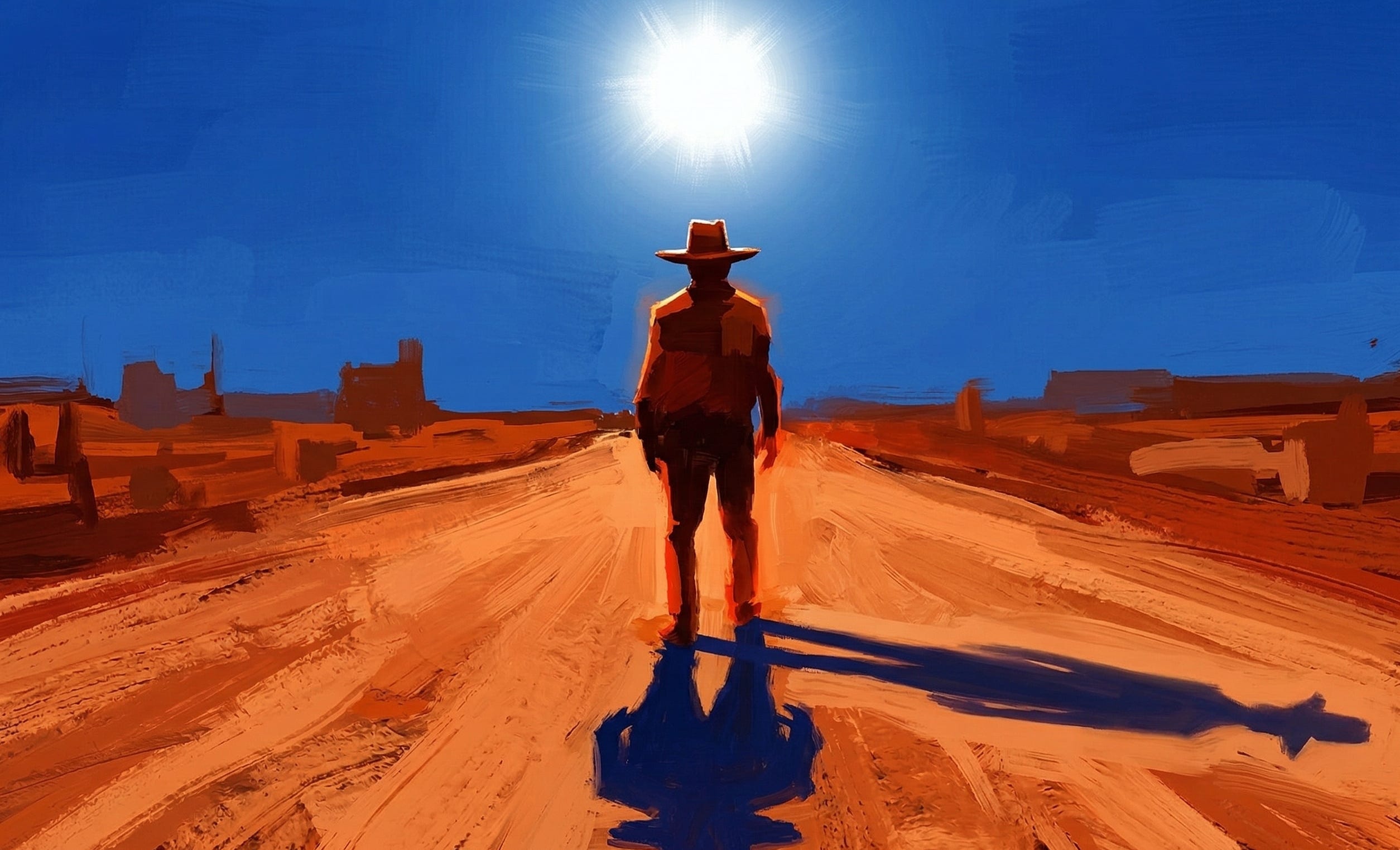
High noon used to mean something specific: the sun, directly overhead, where you stood. A great time for a gun fight on the high street right outside the saloon. Now it’s just a wrong number we inherited from the railroads.
We didn’t lose it. We traded it. We just didn’t know we were negotiating.