

A conversation from one of our recent episodes really stuck with me.

Stephanie, Jamie, and I talked about sports fans who take a bigger interest in individual players versus those who focus more on teams. Personally, I’ve leaned toward teams over individuals and I can’t shake the feeling that I am missing something.

Note: if you’re not very interested in sports, but are a worker in the corporate world, I went in two directions with my curiosity. A second article is coming about how this applies to corporate America in a few days.
Before we really get into my thoughts, there’s something you should understand about my history as a sports fan. In the early days of my professional life, I spent 5+ years doing business development in building architecture and engineering. Most of my clients were universities across the southeast: University of Georgia (one of my alma maters), University of South Carolina (who I did the most work with), Clemson University, and Georgia Tech to name some of the larger schools. When you’re selling to competing schools (particularly those in the SEC), you learn pretty damn quick that smack talk is a one way street. Talking back when your client insults your team is not a very successful or well accepted sales tactic. I had to ease up on my personal allegiances and learn how to adjust my vibe based on the audience.
Learning that lesson softened my edge as a sports fan. I calmed down a bit and started to become a fan of “a really good game,” even if my team ended up losing. Somehow, this also moved me away from being a fan of specific players. As I took in more information about more teams (so I could shoot the shit with my clients), it made focusing on individuals too hard. So all that, plus a undisclosed number of years of life, get us to today.
Formula 1: The best of both worlds
If you’re not as familiar with the concept of rooting for individuals versus a team, you’re in luck! There’s a sport specifically setup to explain it. Formula 1 is structured for individual AND team competition. In each race drivers and teams earn points toward winning one of two trophies:
The Constructor’s Championship (awarded to the full team team with the most points at the end of each season - note that there are 2 drivers on every team)
The World Driver’s Championship (WDC) (awarded to the individual driver with the most points at the end of the season)
On occasion; the driver who wins the Driver’s Championship is NOT on the team that wins the Constructor’s Championship. This was the case in 2024 when Max Verstappen won the WDC and McLaren Racing won the Constructor’s.
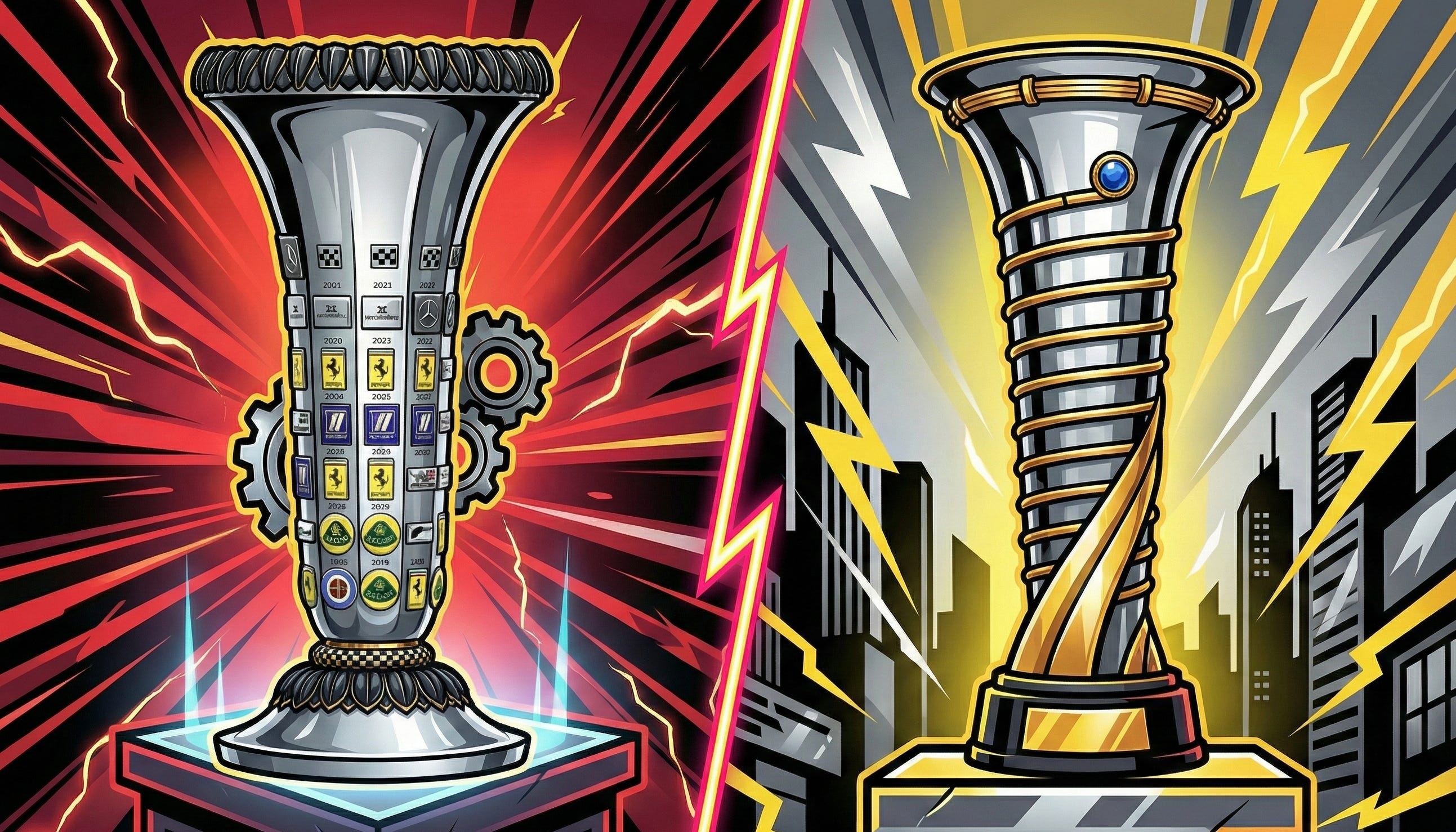
When I watch races with friends, F1 puts our individual versus team focus on full display.
I’m a big fan of Williams Racing (partly due to the team’s history, partly because William is my name) and secondarily I like Mercedes (partly because a co-worker once complimented me as being very much like Toto Wolff and he even bought me the team shirt so I could cosplay). Depending on the weekend I may throw another team in there. Some of my favorite drivers include Carlos Sainz and Lewis Hamilton (who reignited my interest in the sport a good while ago). But on any given weekend I’m mostly interested in what’s happening with the constructors, up and down the grid. I’m far less interested in the individual drivers and the driver’s championship; though I’m super happy to gossip about them (if you’re not familiar, F1 is “The Real Housewives” but for sports).
Most of my friends like one driver, maybe two, and whatever team that driver is currently on. It seems crazy to me, but I’m starting to think I may be the weird one and there’s a world out there I could really enjoy if I find a little more balance.
In all my thinking and research about this topic, I uncovered something interesting: both approaches to fandom have blind spots. And when you understand those blind spots, you start to see why some sports organizations fail over and over again and why fans keep getting disappointed despite obvious talent on the roster.
The Biases That Break Sports
If you focus on individual players, you’re probably guilty of something called the Fundamental Attribution Error. It’s a pattern where people will over attribute others’ behaviors to personality while under attributing the situation or context. Applied to sports: fans blame individual players for team failures. Players get called lazy, chokers, whatever, when the system (front office decisions, roster construction, culture) is doing the actual damage.
Let’s us Jamie’s example from the podcast. Bill Buckner committed an error in game 6 of the 1986 World Series that lost the game. The final score of the game was 6 to 5. Bill error didn’t cause the other 5 runs the Mets scored. He didn’t give up all the other runs, in all the other games that the Red Sox lost, but all we remember is his one error and Red Sox fans will say to this day, “Bill Buckner lost the 86 World Series.”
Fans blame players because that’s how human brains default. Personality over situation. Front offices exploit that by building rosters around star names knowing fans will absorb the blame when it doesn’t work.
But the people who focus on teams (like me) fall victim to another bias: Diffusion of Responsibility. When there’s not enough individual accountability on a team, players don’t feel responsible for their actions and are more likely to loaf. In hierarchical structures, accountability gets diluted across layers and nobody owns the failure.

On the roster, this can play out in real time. In research on team collapse, athletes described how responsibility gets handed off from one player to another in difficult situations. Players pass the ball and then “hide a little.” Think of all the basketball clips you’ve ever seen when someone is just walking back to get on defense. Everyone thinks “I don’t wanna be the one to make the mistake,” or “someone else will cover it.”
When a team is built around stars rather than a team culture, there’s no shared accountability structure to counteract this. Nobody owns the moment.
In the front office, and I’m looking at you Atlanta sports, the pattern is even clearer. In hierarchical structures, people can diffuse accountability to those with greater responsibility and a higher level in the structure. Any time you’ve ever heard someone say, “I need my boss’s approval on this,” they’re taking part in diffusing responsibility. “Followers” don’t take accountability because they feel they have lower status (or have been explicitly told that they have lower status). The GM defers to ownership, the coaching staff defers to the GM, and when it all falls apart, nobody’s fingerprints are on the gun. The decision to prioritize player value over team building isn’t one person’s call. It’s the culture in the front office where everyone assumes someone else is thinking about the bigger picture.
That’s the direct connection: Fundamental Attribution Error explains why fans blame players. Diffusion of Responsibility explains why the front office never gets held accountable for building the wrong team in the first place. The loop closes. And nowhere is that loop more visible than in Atlanta.
The Pattern: Asset-Over-Chemistry
Atlanta has had world-class individual talent for decades, and they’re fantastic at marketing that talent. The amount of swag you see around town is staggering. Yet the trophy cases stay empty (except for the Braves, because for one year the ‘talent over team’ model magically gelled — please note: the team fell apart the year following the World Series win). It’s not bad luck. It’s a structural pattern in organizations like Atlanta’s that means they’re going to keep wasting star power.
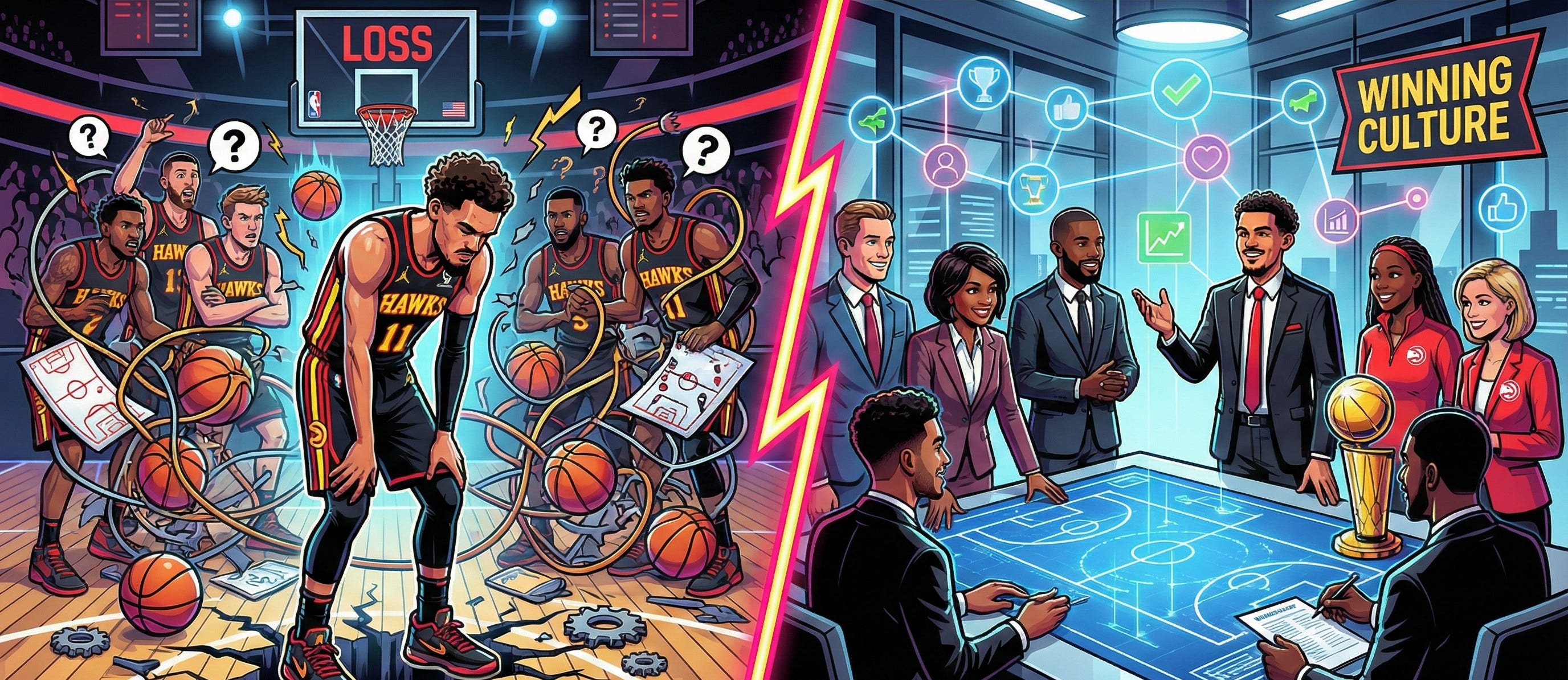
Hawks: The Trae Young Era
The Hawks just traded Trae Young, their franchise player for seven years, to the Washington Wizards for CJ McCollum and Corey Kispert. No draft picks. Just salary relief and role players. That’s how little value a four-time All-Star point guard commanded in January 2026.
The Hawks went 2-8 with Young in the lineup this season before trading him. Meanwhile, they were 16-13 without him. The team defended better and moved the ball more effectively when Young sat.
They reached the Eastern Conference Finals in 2021 with him at age 22, and it looked like the start of something. Instead, that was the peak.
The front office that drafted him turned over multiple times. He was on his third permanent head coach. The Hawks had a choice. Build a culture that could maximize Young’s talents while covering his defensive weaknesses, or just treat him as a tradable asset whose value was declining. They chose the latter.
This is what happens when a front office treats players as assets on a ledger rather than components of a team. The organization optimized for individual player value, not for building something cohesive. And when the individual value declined, they just moved the asset. Fans will blame Young for the losses (Fundamental Attribution Error), while the front office’s failure to build around him got lost in the organizational shuffle (Diffusion of Responsibility).
Falcons: The Cousins-Penix Disaster
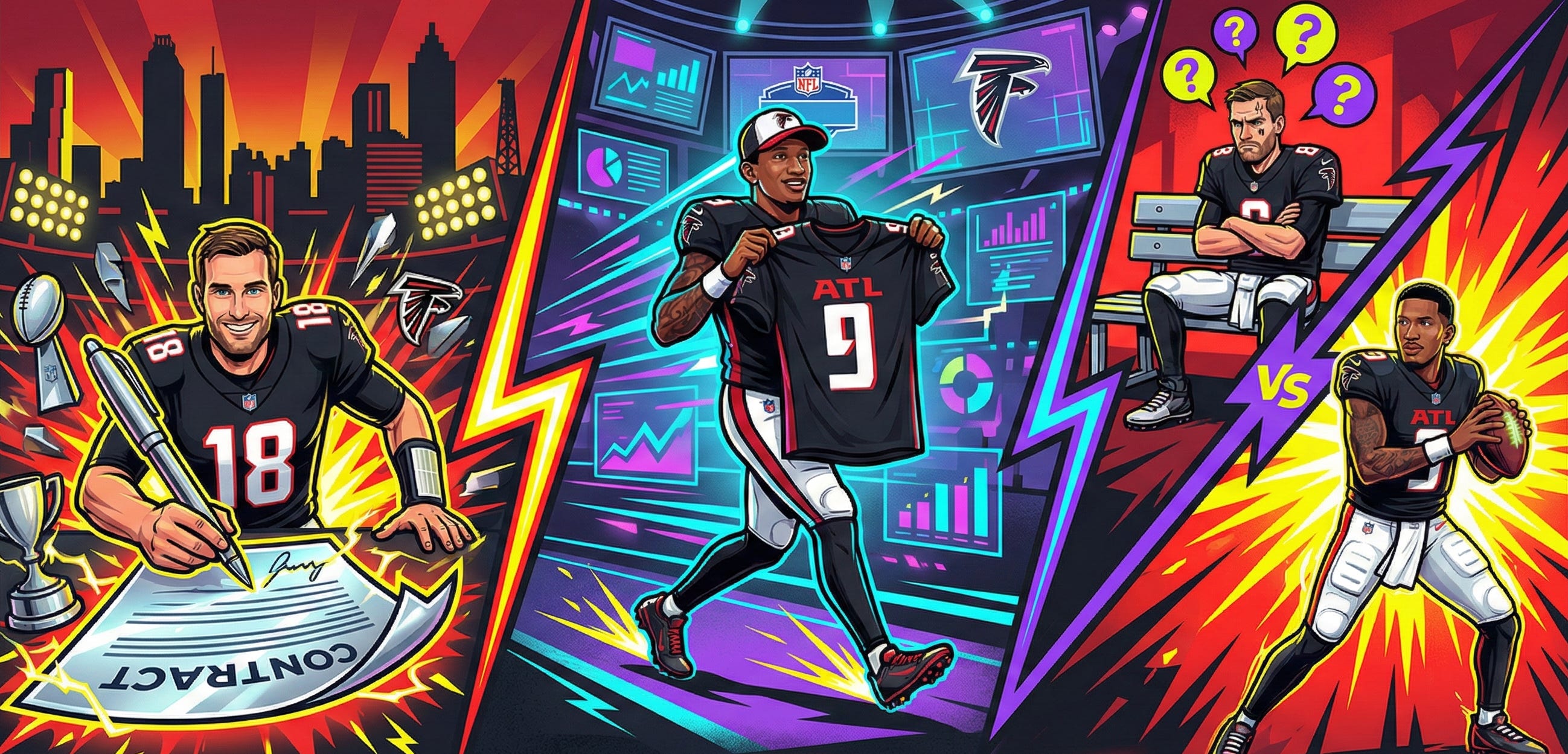
The Falcons signed Kirk Cousins to a four-year, $180 million deal on March 13, 2024. Then on April 25, they drafted Michael Penix Jr. with the 8th overall pick.
Cousins’ agent said they “had no idea this was coming” and got no heads up. The agent clarified: “The truth is the whole league had no idea this was coming. We got no heads up. Kirk got a call from the Falcons when they were on the clock. That was the first we heard. It never came up in any conversation.” Kirk himself said he felt “a little bit misled” and that if he’d known, “it certainly would’ve affected my decision.” He had no reason to leave Minnesota if both teams were going to draft a quarterback high.
This wasn’t some clever long-term plan. This was a front office that couldn’t decide whether they were competing now or building for later, so they tried to do both, and in the end they did neither. Cousins started 14 games in 2024, went 7-7, threw 18 touchdowns and a career-high 16 interceptions, and got benched for Penix in Week 16. Then Penix tore his ACL in 2025, Cousins came back, and now the Falcons have restructured Cousins’ deal to set up his release while still eating $35 million in dead cap.
That’s $100 million paid to Cousins for 22 starts and a 12-10 record. And they still don’t know who their quarterback is.
The Falcons optimized for individual assets without thinking about how it fit the team they were building. Then they drafted Penix without communicating the plan to anyone, including the guy they’d just given $180 million. The front office was focused on collecting individual pieces of value and they forgot to build an actual team.
This is asset management masquerading as team building. And it’s not just bad luck or bad timing. It’s a predictable outcome of organizational structure that prioritizes individual player value over team cohesion. Fans blame Cousins for the poor record (Fundamental Attribution Error), but nobody in the front office gets held accountable for the incoherent decision-making (Diffusion of Responsibility). Just like the Hawks with Young.
I will note that the Falcons made front office changes to address this situation and appease the pretty angry fan base. They fired some people and appointed Matt Ryan as the President. But, this isn’t the first time they’ve made changes like this. It all follow the same pattern of diffusion of responsibility.
Pattern Across Franchises
Look at the patterns:
Consistent prioritization of player market value over team chemistry.
Decision-making that optimizes for the asset ledger, not winning culture.
Front offices structured around analytics and finance focused on individual players, not around coaches that focus on team development who understand how to use those same analytics to fit pieces together.
Atlanta sports teams are built primarily for revenue, not for fan enjoyment. The franchise model treats players as tradable commodities. And when the teams fail, nobody in the front office takes the blame because responsibility is so diffused up the chain that there’s no single point of accountability.
The fans, stuck in their Fundamental Attribution Error loop, keep blaming the players. The front office, protected by Diffusion of Responsibility, keeps making the same structural mistakes. Both sides feed the problem.
The Contrast: Teams That Get It Right
The Spurs. The Patriots. The Seattle Seahawks. These franchises blend hiring individual superstars and bolstering them with the talent they need to succeed. They value chemistry alongside individual performance. They don’t just collect assets, they build teams.
Pete Carroll’s first rule at Seattle was ”always protect the team.” The veterans became the beacons for that rule, taking younger players under their wing. It helped players stay eligible, stay out of trouble, practice hard, and take responsibility for their in-game assignments. That’s culture. That’s the opposite of diffusion of responsibility. It’s accountability flowing from teammates to teammates, not getting lost in layers of hierarchy.
The Seahawks may have moved on from Pete Carroll, but guess what, they’re in the Super Bowl again this year. It’s starts from the top.
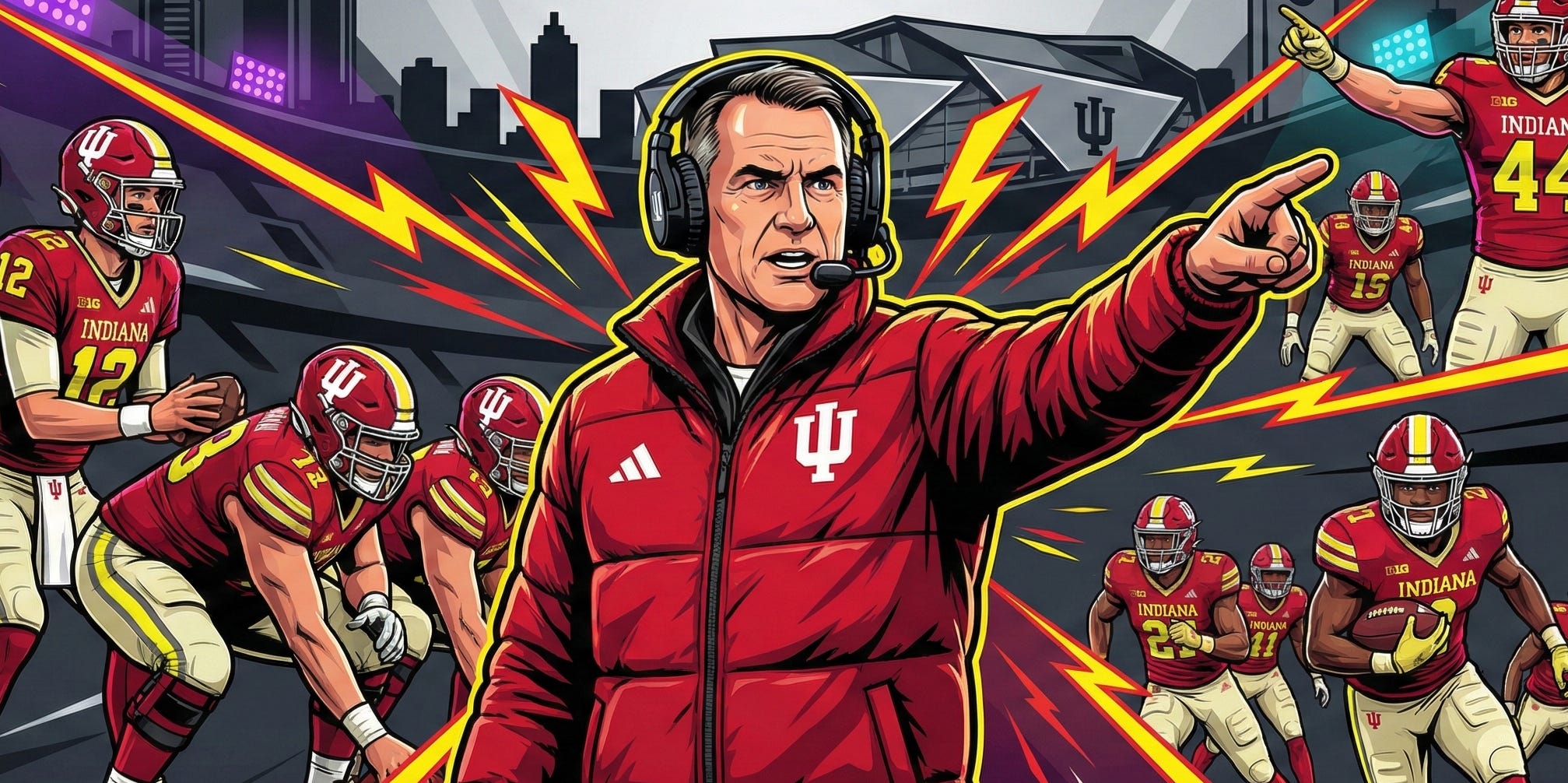
And there’s Curt Cignetti, recent College Football Playoff champion coach who took Indiana from nothing to champion in two years: “production over potential.” That’s the antidote to Atlanta’s model. Don’t pay for the name, pay for what they’re actually doing on the field right now.
These organizations understand something Atlanta doesn’t: individual talent is quantifiable, but chemistry is not. Risk-averse front offices default to what they can measure. But the things you can’t measure like accountability, trust, and shared purpose are often what separate winners from the teams that waste talent.
You have to delegate responsibility to people who have the direct influence over a given task, and then trust them to do it. This is Indiana University and Curt Cignetti, to a ‘T.’ It’s also what Seattle did under Carroll; accountability wasn’t diffused up the chain, it was distributed across the locker room where it could actually function.
The System Behind It
Why do front offices default to asset management over team building?
Incentive structures are easy to quantify. You can measure player value. You can’t measure culture. Executive backgrounds matter too; if your GM comes from finance and analytics rather than coaching or player development, they’re going to optimize for what they know how to measure. It doesn’t mean they’re bad at what they do, it just means there was a mismatch in the hiring process.
There’s also a short-term thinking problem driven by ownership and executive timelines. Building culture can take years. Signing a star gives you headlines next week and immediate merch sales. When your job security depends on showing results fast, you chase the name over the coherence.
And finally, there’s the hierarchy itself. The more layers between decision and outcome, the easier it is for everyone to assume someone else is thinking about the big picture. The GM assumes ownership has a plan. The coach assumes the GM has a plan. The players assume the coach has a plan. Nobody actually owns the plan.
That’s how you end up with Cousins and Penix on the same roster. That’s how you end up trading Young for role players. Everyone made defensible individual decisions, but nobody was responsible for making sure the decisions added up to something coherent.
What This Means for You
You can spot this pattern in your team’s decision-making. When ownership talks about “building around our stars,” look at the gaps between those stars and ask yourself: are they building a team, or just collecting assets?
An immediate internal signal you can use to check-yourself is to ask, “how badly do I want to buy this player’s jersey.” If every time your team makes a trade or adds a new player you find yourself pulling up the Official {your sport here} Gear store online, your team is optimizing for star power and you’re falling into the Fundamental Attribution Error trap. When they make a move that doesn’t make sense, like signing Cousins and then drafting Penix, ask who actually owns the decision and what happens if it fails. If nobody takes the blame when it goes wrong, you’re watching Diffusion of Responsibility in action.
Understanding this won’t fix your team. But it explains why hope keeps getting crushed. It explains why talented rosters underperform. It explains why you feel like your team is always one piece away but never gets there.
The next time your team signs a big name or makes a splashy trade, watch what happens to accountability. Watch whether anyone takes responsibility for building something coherent, or whether everyone just assumes someone else has the plan figured out. Watch whether fans immediately start blaming the player when things go wrong, or whether they look at the system that put that player in position to fail.
Because until someone in that organization takes ownership, real ownership, not the diffused kind, nothing changes. The fans keep suffering from Fundamental Attribution Error; blaming the players. The front office keeps benefiting from Diffusion of Responsibility; avoiding the blame. And the trophy case stays empty.
Atlanta has the talent. It’s always had the talent. What it doesn’t have is anyone willing to own the outcome of putting that talent together into something that works. And until that changes, you’re going to keep getting disappointed, not because the players aren’t good enough, but because the system is designed to fail while ensuring nobody has to take responsibility for it.