

We had just watched Hamnet. If you haven’t seen it, you should know that the gravity isn’t lessened by knowing what happens. Maggie O’Farrell and Chloé Zhao tell the story of William Shakespeare and Agnes Hathaway and their children. Their son, Hamnet, died around age eleven. His death almost certainly fueled the writing of Hamlet.
I stood in the living room realizing I was in a moment of active personal change. The way I saw things and interpreted the world would be different from here on out. Two thoughts echoed in my head:
One: I didn’t know they still made movies that good.
Two: How is it possible that we’re still telling this person’s stories and making up new stories about his stories more than 400 years after he died?
Shakespeare was so skilled at writing that we’re not just reading his work. We’re grieving the loss of his child alongside him, right now, today. And Hamnet isn’t even something he wrote. It’s a novel by Maggie O’Farrell, published in 2020. Shakespeare is such a force that the stories we tell about his stories can climb to the top of our culture in a completely different century.
So where am I going with all this?
Writing changes how you see the world
Alan Moore once said that writing is a magical power and that it can modify the reality and consciousness of the entire species. I believed him when I heard it, and didn’t fully understand what he really meant until I was sitting on my couch, softly weeping as Paul Mescal delivered the “to be, or not to be” soliloquy.
I had heard those words a hundred times. In school. In movies. In jokes. They’re background furniture in the room of my life. But in Hamnet, framed inside the grief of a father who just lost his son, I could finally feel what they were meant to carry. It’s not a passing thought about life and death. It’s a man standing at the edge. In that moment, he’s deciding whether or not to keep going.
The entire way I see that speech and honestly, the entire way I see Shakespeare, shifted on a Tuesday night on my couch. That’s what Moore was talking about. Writing doesn’t just record reality. It rewires it.
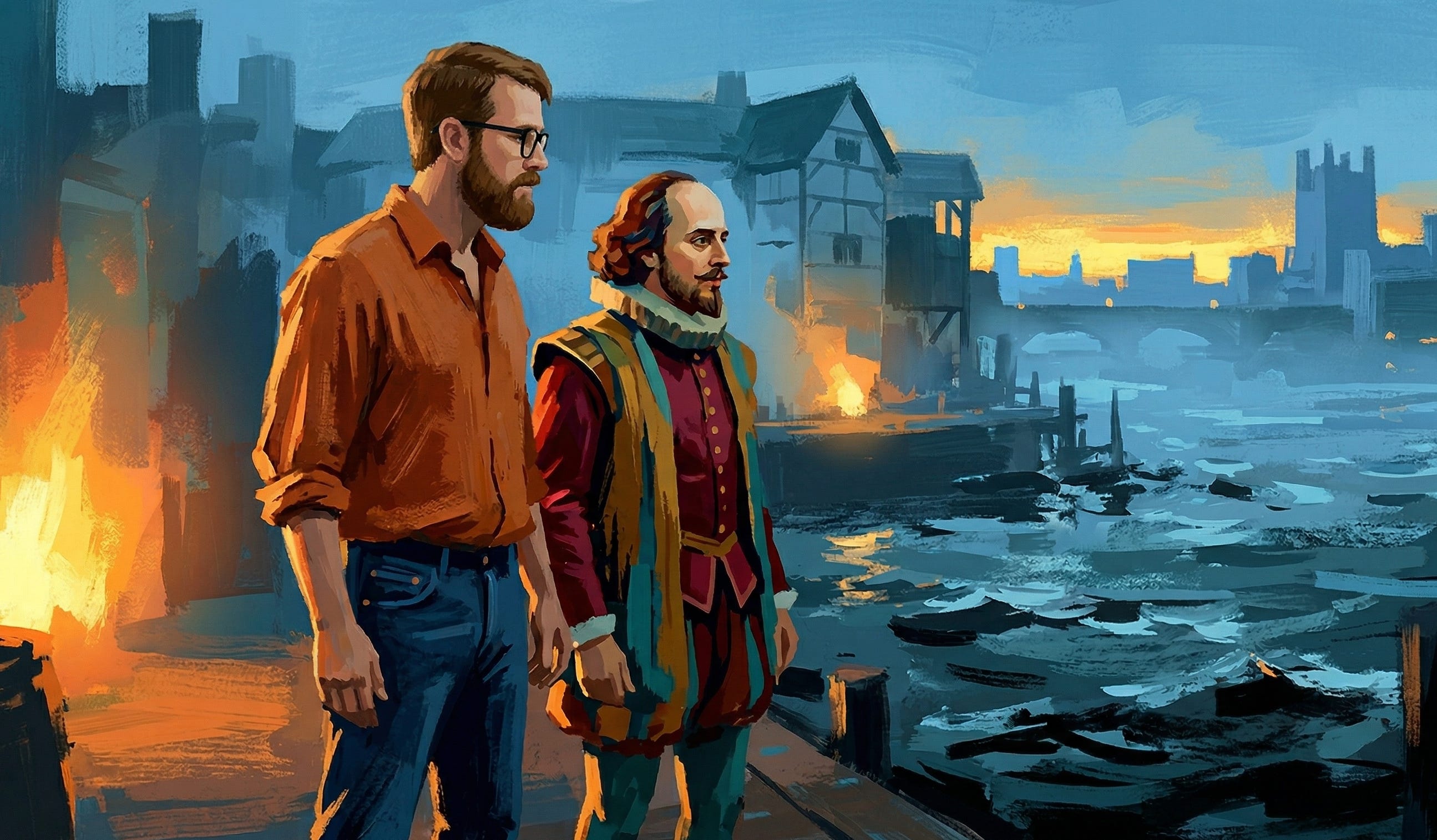
The writers who survive aren’t the most talented
Here’s the thing that kept pulling at me: plenty of brilliant writers are forgotten. Craft alone doesn’t keep you alive for centuries. The writers who survive, who people still cry over, still adapt, still argue about, are the ones who were processing something real and couldn’t fake their way through it.
Shakespeare didn’t invent grief. When he wrote Hamlet while he was inside grief. That specificity is what makes his work universal and timeless. Sitting on my couch, I wasn’t borrowing his emotion. I was feeling my own by following the map he’d laid out in his work.
The mechanism sounds so simple on the surface. When a writer is honest with their emotions and successfully channels them into their work, it becomes more than just some story. It becomes a living place. People can visit, interact, play, enjoy, and share their own emotions. The author doesn’t disappear into the work. They’re preserved in it.
Homer probably knew soldiers who never came home. The Brothers Grimm collected stories from people surviving brutal lives. Pu Songling wrote ghost stories while failing his imperial exams. All that longing is in the work. These writers weren’t performing. They were processing. That’s why they lasted.
You can feel the difference
Most of what we consume and most of what gets praised, awarded, put on syllabi is creative craft that’s an embodiment of human emotions. You can feel the difference, even when you can’t name it. The gap between a story that you feel in your soul, a story that impresses you, and a story that makes you say, “I’ll never get that time back,“ isn’t subjective.
Like it or not, this is why real country music can be so universal. Not the formula Nashville pumps out today. I’m talking George Jones, “He Stopped Loving Her Today.” You can feel that song in your chest. You can see the wreath upon his door. That’s specificity doing its work. A song about one man’s refusal to let go becomes a song about everyone who’s ever held on too long.
The filter isn’t genre or complexity or prestige. It’s whether there’s an actual person somewhere in the work, bleeding.
O’Farrell understood this. She didn’t write “a literary novel about grief.” She wrote about a mother who couldn’t save her son, and she wrote it like she was in the room. Which is why, on a random Tuesday, my wife and I ended up crying with people we’ll never meet, over a boy who died before the modern world existed.
Cleverness fades. Wounds don’t.
If you want to dive a little more into this, check out Malcolm Gladwell’s Revisionist History episode The King of Tears where he delves into why country music makes you cry, and rock and roll doesn’t. I listened to it years ago, and understand it in a much different way after Hamnet.